

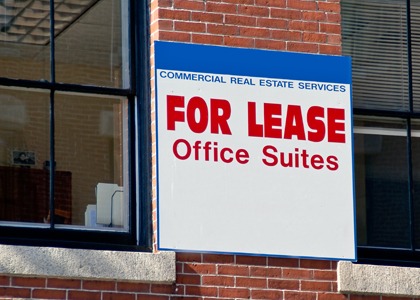

5 things a tenant should know about commercial leases
Posted by John Chesworth Jan 19th, 2009, in Property

The majority of businesses need premises to operate from, whether they be for offices, workshops, factories or storage facilities. While some businesses own the premises they operate from, most occupy under a lease paying a market rent. But, there is more to a commercial lease than the payment of rent and the answers to the following commonly asked questions will give potential business tenants some useful guidance:-
1. Once I have signed the lease can I get out of it if my business suffers a downturn?
Leases are generally granted for a fixed period of years known as a term. The lease term can only be ended early by the tenant if, prior to entering the lease the landlord has agreed that the tenant has an option to do so, or, the landlord later agrees to release the tenant from the lease before the term has expired. If neither of these situations arise, and you cannot find an acceptable replacement tenant for the premises, you may well remain bound to pay the rent and comply with all other obligations until the end of the lease term, even if you have vacated the premises.
2. I know there will be rent to pay, but are there any other costs I may be responsible for under the lease?
If you are renting part of the landlord’s building such as an office block, you may also have a responsibility to contribute to the upkeep and maintenance of common parts of the whole building such as the roof and structural walls, or other things that are used in common with other occupiers of the landlord’s property, such as lifts or a reception area. This is often referred to as service charge. The tenant will also be responsible for the payment of the insurance premium for the premises to cover damage to the premises and also the loss of rent the landlord may suffer if the premises become unusable due to such damage.
There can be a cost if you want to transfer the lease, or sub-let part of the property to someone else, as you will usually need the landlord’s written permission, and the landlord can normally claim the cost of considering whether to agree to the transaction and also drafting and agreeing the form of the written permission. Finally, you will usually be responsible for the business rates, utilities and any other outgoings in relation to the premises.
3. If I find that there are repairs required to the premises, am I right to think the landlord will sort them out?
Most commercial landlords not only seek to avoid any responsibility to carry out repairs to the premises, but will actually seek to put the responsibility for putting the property into repair on the tenant’s shoulders. A tenant who agrees to a full repairing obligation can find himself with a repairing bill running into tens of thousands of pounds when the lease ends, despite the fact that the disrepair pre-dated the lease itself. A well advised tenant will try to limit his repairing responsibility to keeping it in no worse state than it was at the date of the lease. For this reason, it is highly recommended that an ingoing tenant obtains a survey to check and record the condition of the premises before they enter into a lease.
4. What happens if, after I have taken the lease, I discover there are problems relating to the premises that impact on my business?
The principle of “buyer beware” relates to a tenant taking a lease in the same way that it does to a purchaser buying a property, meaning that a tenant takes a property “warts and all” and he must satisfy himself that it is suitable both physically and legally for the use he intends. The research into the property carried out by a good lawyer will reveal many things about the property, including whether the landlord actually has the power to grant the lease, any adverse rights that may affect it as well as any rights that benefit the property such as rights of way. Lawyers can carry out a range of enquiries and searches to discover such things as planning permissions affecting the land, whether the property is connected to the public highway, whether there is any risk that the premises may be on contaminated land, whether the is a risk of subsidence due to historic mining in the area, whether the property is connected to mains utilities and a host of other information.
It is common for tenants who have not been represented by solicitors to enter a lease without finding out any of this information. If a problem rears its head in such a case, say for instance the property does not have planning permission to use it for the tenant’s business, he will have no comeback against the landlord and the tenant will have to continue paying the rent despite the fact he may have a useless asset.
5. I’ve heard that a landlord can change the locks of my business premises if I am late paying the rent, is this true?
In short, yes. The powers of a commercial landlord to deal with non-payment of rent are far-reaching. Forfeiture is the procedure by which a landlord can terminate a lease and virtually all commercial leases will have a clause allowing the landlord to terminate the lease if the rent is unpaid for a specified number of days, usually somewhere between 14 -28. Unlike their residential brethren, commercial landlords do not need a court order to retake possession of leased property if their right to forfeit the lease has arisen because of late payment of rent. Landlords also have the right to send bailiffs in to seize the tenant’s goods and sell them if the rent is unpaid, but legislation will soon come into force to restrict this right.
The above answers cover some basic issues relating to commercial leases, but in reality only scratch the surface of what is a complicated topic. If you have any queries relating to commercial leases please comment on this article and I will try and answer them. I will also be posting further blogs on different aspects of commercial leases and commercial property in general and welcome and comments and contributions you may have.
192 Comments
By John Chesworth on January 26th, 2009
Hi Deborah
There are many distinctions between a lease of commercial property and one of residential property, one of which is the steps a landlord has to take before they forfeit or terminate a lease.
Commercial leases usually allow the landlord to forfeit the lease in the following circumstances:-
1. if rent remains unpaid over a specified number of days after it fell due;
2. where there has been a breach of any of the tenant’s other obligations in the lease;
3. if the tenant has become insolvent.
If a commercial landlord is forfeiting for non-payment of rent, they do not need to give notice first. If the landlord forfeits for any other reason, they must first give written notice to the tenant and a failure to do so will make the forfeiture unlawful. In either case a commercial landlord does not have to go to court, but this is an option available to them which landlords often choose if there is likely to be a dispute as to whether the tenant is in breach of its obligations under the lease.
If a commercial landlord forfeits for arrears of rent, they will often change the locks immediately. If they go to court, it will take at least 6 weeks to get a court order.
The landlord of residential premises is much more restricted when it comes to terminating the lease and cannot try and evict a tenant without a court order. It will generally take at least 8 weeks for a residential landlord to get a court order for possession.
I hope this helps.
By Katie Grange on January 27th, 2009
Hi there,
I am the owner of a sandwich bar who has recently been evicted from her premises through the lock changing method in which you have just described.
Basically, I have had a nightmare business relationship with my landlord for the past 8 months and eventually issued civil proceedings against him a few weeks ago under the grounds of harassment and various breaches of the lease, (including cutting off the telephone line which I bought with the businesses.)
When I originally bought the business we had agreed that I should pay my rent on a monthly basis, however when our business relationship started to faulter my landlord ordered that I pay the rent termly, which I agreed only to keep the peace.
However, when I started court proceedings in the past month I gave my landlord notice that I would revert back to paying monthly as I believed this to be the easiest solution whilst legal proceedings were taking place.
The next thing I know, I try to open my sandwich bar one morning and the locks have been changed and a bailiff notice in the window for outstanding rent arrears. To the best of my knowledge I am not in rent arrears because I have payed up to Febuary 14th 2009, and intended to make another monthly payment when it was due.
To make matters worse, a few days later there is a notice in my shop window stating that the business will re-open the following week. My landlord has evicted me out of my premises and now plans to run my business himself. Surely this is not legal?
I would really appreciate some advice as I really do not know where I stand in this situation and feel helpless.
Katie.
By John Chesworth on January 27th, 2009
Hi Katie
The starting point in any dispute of this nature is to look at the terms of the lease, and in order to advise you accurately I would need to see the lease. However, there are some general points which may be of use to you.
If, as you say, the right to use the telephone line came as part of the package when you took the lease of the premises, his actions in cutting off this line will be unlawful.
The lease should dictate the intervals for payment of rent. If it states that rent is paid monthly, and you have paid the rent due monthly then you have not breached the lease. A landlord who changes the locks when his right to do so has not arisen is breach of his obligations under the lease and will be responsible for loss caused to your business, and you can also ask the court for an injunction to allow you back into the premises.
If the landlord has taken a calculated step to take your business from you unlawfully, in the hope that you would not mount a legal challenge, a court would view this very dimly.
Even if there is some rent due, and the landlord has forfeited the lease lawfully, you still have the right to apply for what is known as relief from forfeiture. This is done by paying all rent due, and also the reasonable costs of the landlord and requesting the possession of the property back from the landlord. If he refuses, you can make an application to court who will order that possession is given back to you, if the application is made sufficiently promptly.
If you want some specific advice on your situation please give the office a call, and we can hopefully help you out.
By Claire on January 28th, 2009
Can a Landlord have a commercial lease for a property that is not zoned commerical (i.e. renting a barn for dog training). Also is it legal to make a commercial lease dependant on a Residential lease? In our case…we rent the barn on a property for the purposes of a dog club and he wants us to sign a commercial lease that he has tied into the house lease on the same property. His clause is that if the tenants move out of the house on the property, our lease also comes to an end. The property is not zoned commercial.
By John Chesworth on January 29th, 2009
Planning law and landlord and tenant law are governed by different rules and regulations, but the effects of each overlap.
The local planning authority will designate certain zones for different types of use. However, that does not mean that a specific property within a zone cannot be used for a purpose which falls outside the use designated for the zone. What you have to look at is the planning use permitted for the individual property. You can get details of this from the local planning authority.
Even if the local planning authority has not permitted a specific use for the property, it will be lawful to continue a use for the property which has been carried on continuously for the past 10 years.
With regard to your present situation, landlords and tenants are relatively free to come to a deal relating to the terms of leases, which could include a commercial lease being terminated where a residential lease also comes to an end. It sounds to me that you don’t want such a provision, so what you need to assess is what is the strength of your bargaining position? If you have a written lease of the barn at present that would need to be assessed, if not then you do have rights under the Landlord and Tenant Act 1954 which provide security of occupation for business tenants.
If you would like some further help on this please call the office as we will need some further details and documentation before we could avdise further.
By sue kiernan on January 30th, 2009
hi
i have a tenant in commercial premises who i inherited when i purchased the freehold.
his previous lease is coming to an end and he is refusing to sign a new lease as it is a full repairing even though i have agreed to exclude the ongoing repair issues,and to pay for them as and when they are completed, this is a trading business and so the repairs can only be carried out at certain times to minimise disruption.unfortunatly his previous lease was a one piece sheet of paper which didnt amount to much and i require him to sign a standard law society lease, he is now saying he will vacate the premises taking everything including the floor with him,
where do we go from here?????????
sue
By John Chesworth on January 30th, 2009
Hi Sue
If your exisiting lease was one sheet of paper, then it more than likely did not exclude the provisions of the Landlord and Tenant Act 1954 (the Act). This means that in order to create a new lease with standard commercial terms you will need to ternimate the existing lease by serving 6 months notice compliant with the Act and thereafter negotiating new terns if your tenant wants to remain in occupation.
The notice in question is a standard form and has to be served in a prescribed manner. Once the notice is served, the tenant will have the option to either renew their tenancy before the end of the notice or alternatively leave the premises and end the tenancy.
Give me a call if you need further help
By sue kiernan on January 31st, 2009
thanks very much for the advice,this is a great site,
thanks again
sue
By Ray Browning on February 12th, 2009
Hi,
Have a complicated one! I had a lease which expired. This was in the name of my limited company, but I also signed as a personal guarantor. Under this lease I signed the exclusion to the tennant act etc. This lease expired over a year ago and I negotiated a new 3 year lease, taking me personally off the lease, and only in the name of the limited company. However, this lease was never correctly executed as I forgot to sign it and it was returned to me to sign which I never did. I now find myself in position where I can’t continue running the company do to a substantial business downturn, adn I haven’t paid rent for the last two months. I am avoiding liquidation by paying everyone but the landlord is trying to hold me to the new three year lease, two years of which are remaining. Can I argue that as the new lease was never executed that the old lease still applies and I am on a month to month tenancy?
Thanks Ray
By John Chesworth on February 16th, 2009
Ray
I fully endorse your first sentence, this is a complicated one. However, I can give you some principles that will hopefully help.
The Landlord and Tenant Act 1954 (the Act)includes, amongst other things, provisions which allow for the continuation of a business tenancy even after the agreed term has ended, and also gives a business tenant the right to renew thier tenancy. In order to exclude the Act there is a procedure which involves the tenant giving a declaration that they undertsand the Act will not apply. It appears, that in relation to your first tenancy, this is what you have done.
Where the Act does not apply, the lease comes to an end on the last day of the term stated in lease. Where a tenant remains in occupation after the term is expired and continues to pay rent, a number of different scenarios can arise.
The first and most common is where the parties are negotiating the terms of a new lease, and for the time being do not intend to bind themselves to any other arrangment than a temporary continuation while negotiations continue. This is known as a tenancy at will and either landlord or tenant can terminate it at any time.
The second case is where the parties do nothing at all and the rent is continually paid and accepted. In this case a court can find that a periodic tenancy has arisen, which is based on the periodic payments of rent coupled with the exclusive occupation of the property by the tenant. A periodic tenany cannot be excluded from the Act, and will therefore, create rights for the tenant that they did not have under the orignal tenancy. Where the original tenancy was excluded from the Act, the courts are reluctant to find that a periodic tenancy has arisen, for the above reason.
The third scenario is where the parties have entered into a binding agreement for a new tenancy. The general rule is that an binding agreement for a lease for 3 years or less does not need to be in writing. However if the parties intend that the Act be excluded, the tenant must sign the relevant declaration before entering into the contract and the contract must contain a written provision excluding the Act.
Therefore, a key factor in your case will be whether or not the new tenancy was also to be excluded from the Act.
This is a complicated area of law, and I have outlined some basic principles that apply. If you would like us to provide some detailed advice specific to your problem, please do not hesitate to get in touch.
John
By Ray Browning on February 20th, 2009
Hi John,
Thanks for that very detailed reply. The new tenancy was to be exluded from the law as well – but I never signed that exclusion either. The landlord is not a happy camper at the moment.
Best
Ray
By anne on February 21st, 2009
we have just sold a leasehold hotel and unfortunately had to sign a rent guarantor for the buyers. they are having problems paying their next quarters rent due on 1st march.What are the procedures now and what are the time scales before they contact us?
By James Page on February 23rd, 2009
Hello,
Stumbled across this site and the previous answer which is similar to my situation. I signed a lease which was supposed to be contracted out of the 1954 act. The lease explicitly mentions this. However, I did not sign the contracted out “Health warning” or whatever it is called because I believed I was already covered by the act. Regardless of the latter, I signed the lease but as I said did not sign the contracting out health warning. Where does that leave the lease and what rights do tenant and landlord have? Surprisingly the landlord did not persue for signing of the contracting out notice. They gave me the 14 days warning etc. buit when I did not sign it I heard no more from them.
Thanks
James
By John Chesworth on February 23rd, 2009
Hi Anne
Due to the economic climate, your situation will be an ever more common problem. Where a guarantee is given for the rent due from a tenant there are statutory procedures which a landlord must follow if the lease was entered into after 1995.
Section 17 of the Landlord and Tenant (Covenants) Act 1995 provides that the landlord can only obtain payment from a guarantor if they have first made a written request to the guarantor for payment. This request must comply with the provisions of the above section and importantly must be made within 6 months of the rent installment falling due. Once the request has been properly made then the guarantor will have to make payment, and could be pursued through the courts if they fail to pay.
The best thing to do for the time being is to keep your head down. There is a chance that the landlord will fail to give you notice within the 6 month period, and you will then avoid liability for that specific payment.
John
By John Chesworth on February 23rd, 2009
James
The fact that the contracting out procedure was not followed properly does not affect the validity of the lease if it was properly signed and completed. If you have signed the lease and it has been dated and completed by the landlord the lease will be binding, save for the contracting out clause which is only effective if the contracting out procedure has been adhered to.
The 1954 Act contracting out procedure requires that the tenant gives a written declaration prior to entering into the lease, whether or not it is a renewal. Where the declaration is given 14 days or more before entering into the lease, a simple written declaraion is given. If the declaration is given less than 14 days before the lease is entered into, then a statutory declaration made before a solicitor is required.
As you have not given the declaration, then there will be a binding lease but it will have the protection of the Act, which means you will have a right to renewal at the end of the term.
I hope this clarifies the position.
John
By Stuart on February 27th, 2009
I have a lease due to expire in 1 month. I have verbally agreed with the landlord that we will continue on a month-to-month basis with a notice period of 3 months from me and 6 months from my landlord. In this climate neither of us wish to be tied into a long fixed lease.
In the background there is an interested purchaser of the freehold who would like the premises for a similar business. We have discussed selling my business goodwill as a seperate entity and I have agreed this would be possible.
My concern is that they could just wait for the lease to expire, purchase the freehold and as my new landlord take possesion for themselves and negate having to purchase the business goodwill. Leaving me high and dry!
Are there any safeguards against this?
By John Chesworth on February 27th, 2009
Hi Stuart
In the comments above I have referred to the Landlord and Tenant Act 1954 (the Act) and this is central to your situation. As you are occupying the property for a business, and if the original lease was for over 12 months then you will have the protection of the Act unless steps were taken to exclude it by the contracting out procedure. This would have involved you signing a decelaration confirming you agreed to waive the protection of the Act.
If you have not contracted out of the Act then your lease will continue on until the landlord serves a notice under section 25 of the Act and this notice must be at least 6 months. When this notice is served you are entitled to apply for a new tenancy on terms which are either to be agreed or decided by the court.
If the property is sold the new owner could object to a new tenancy but only on limited grounds. For a landlord to object on the ground that they want to use it for their own business, there is a condition that they must have owned the property for 5 years previously which the new landlord will not be able to satisfy.
Another ground the landlord could use is that they want to carry out a substantial redevelopment of the property, but this has to be more than a mere facelift for the property. The other grounds either require some default on the tenant’s part, or an offer by the landlord of reasonably suitable alternative accommodation.
Therefore, if your tenancy is protected by the Act, and you have not defaulted on the terms of the tenancy, you should be fairly secure.
John
By Stuart on February 27th, 2009
Hi John
Thank you very much for your reply.
I took over the remaining 4.5 years of a 15 year lease and as I have not signed anything other than the original lease, I am quite sure that I have not made any agreement to waive my protection under the act.
That and the 5 year ownership condition you refer to (and that I have no defaults on my lease)have given me considerable peace of mind. Thank you.
Stuart.
By Susan Homes on March 5th, 2009
Hi, there, We have a chip shop at the rear of our Property. We lease part of the commercial property in the form of a garage. The leasehold is 999 year and £10 per year. The owner of the commercial property has recently started harassing us over his rights to access the garage for inspection purposes. The lease states we should allow the landlord access upon him ‘giving reasonable notice’ for the purpose of ‘inspection and repair’ throughout the said term. There are no repairs needed on the garage. It also states that we should have quite enjoyment of the property. It does not state a reasonably frequency of inspection. Although when we bought the property our conveyance stated once a year would be normal. However the business owner has stated he would like to inspect ‘once or twice’ per week. Unfortunately this would mean me having time off work to allow him access. What would you consider a normal frequency of inspection? Thanks Susan.
By John Chesworth on March 8th, 2009
Hi Susan
It is not unusual to have a lease with this provision and a balance must exist between the right of the landlord to carry out an inspection and your right to use and enjoy the property.
If the landlord’s right to inspect is expressly stated to be for the purposes of checking for disrepair, then it would seem unreasonable if the landlord checked one week and then wanted to recheck a few days later. The frequency of the inspection may well depend on the type of premises and what the tenant was doing in there.
If the landlord is using the right of access to try and harrass the tenant, as opposed to a proper and reasonably necessary inspection, then the courts would not sanction this. If there is no subsisting disrepair at the premises, once or twice a week does seem excessive.
John
By Joanne Cain on March 11th, 2009
Hi,
We have a bathroom and kitchen show room. Our insurance company have asked for a copy of the electrical certificate for the property and have threatened that if we do not provide this they will have no option but to cancel our insurance. Can you tell me who is actually responsible for ensuring the electrical certificate is carried out whether it is a landlord responsibility or a a tenant responsibility. Also how often does this need to be carried out.
I would be grateful for your advice.
Kind Regards
Joanne
By John Chesworth on March 11th, 2009
Hi Joanne,
This query will depend upon the terms of your lease. However, most commercial leases will place most if not all of the obligations relating to the day to day running of the premises on the tenant.
The lease may not specifically mention electrical certificates, but if there is a clause which states that the tenant shall comply with all laws statutes etc relating to the use of the premises, then this will cover any legal obligation to obtain the electrical certficate. Even if the lease does not contain this type of provision, there will be no obligation on a landlord by implication to obtain the electrical certificate, and if your insurer requires such a certificate then the onus will fall on you to obtain it to avoid your insurance being invalidated.
Not the answer you were hoping for I’m afraid, but again an illustration of the strength of position a commercial landlord holds.
John
By pat on March 13th, 2009
Hi,
i signed a 5 year lease £20000 pa rent. I am now in bad financial situation and have treid to get out of the lease by advertising for new tenants and even tried to get the landlord to end the lease but he is having none of it and demands we pay the remaining £80K to get out of the lease. We cant afford anything at the moment we are nearly bankrupt if our landlord kicks us out and changes the lock does that mean he can nolonger pursue us for the rent? i.e the remainder of the lease amount? please respond asap really need help here thanks
By John Chesworth on March 16th, 2009
Pat
If the landlord forfeits the lease by changing the locks, he terminates the lease and cannot claim future rent from you, although he will be able to claim any rent that may have fallen due at the date of termination.
So to be clear, if the landlord forfeits, he can claim for arrears but can’t claim rent which has not yet fallen due for payment.
I hope this helps.
John
By pat on March 16th, 2009
Thanks VERY much!!
By Terry on March 16th, 2009
I, along with about 30 others, had 6yr leases that expired over 4 years ago. The council markets manager told me that they have no staff at present to do it. Obviously its a lie. Therefore they have an ulterior motive. A new law has been put in force since 2003 and 2 of the 3 parts are currently being carried out. We are the 3rd part.Most of us have been there over 20yrs. See Hereford 2003 Law on google.
What security of tenure do we have?
By John Chesworth on March 17th, 2009
Terry
Under general law, if your lease is protected by the Landlord and Tenant Act 1954 (the Act) you have the right to ask for a new tenancy after your lease has expired by giving notice in the form prescribed by section 26 of the Act.
The landlord can only object to the application on certain grounds, which include an intention to possess the property for their own use, an intention to substantially redevelop the site and also, local authorities can object where a compulsory purchase order is in place in respect of the premises.
Having had a quick look at the Hereford Markets Act 2003, there is nothing there that immediately suggests to me that the landlord could oppose a new tenancy. If you want to force the issue, a section 26 notice could be served.
If you want me to have a look at your lease please fax it over to me on 01772 258227 along with a note of your number and I will give you a call to discuss.
Regards
John
By Lucy Wyre on March 30th, 2009
My business partner and I currently run a finance brokerage and having downsized the company and making all our staff redundant, we can no longer afford to struggle on with the rent. We tried in vain several months ago to negotiate with our landlord and he verbally agreed we could pay reduced rent to help us in the current climate and arranged on 3 separate occasions a meeting with us to finalise the details.
Each time he never showed up for the meetings and the day after it was too late to give notice he wrote to us quite smuggly saying “I’m glad you’ve decided not to give notice, and by the way your now tied in for another 12 months” As you can imagine, we were left extremely frustrated but knew their was absolutely nothing we could do.
We struggled on with the rent until now, where we physically now only have myself and my co-director operating the business. Last month we were 1 day late with the rent, and he sent the bailiffs in so we’ve been left with no choice but to remove all our belongings from the premises and basically up and leave.
We wanted to know where we stand with this, we are not in arrears at the moment but not intend to make any further payments either. (As i mentioned the lease expires 01/09/09 and this time round we have already given notice)Can they send bailiffs to our homes? (We haven’t signed any personal guarantees and we are a limited company)
If they took us to court and we had to pay the remaining rent we would have no choice but to close the company as are just about managing to keep our heads above water
We’ve got email proof from the landlord of when we asked to negotiate rent, and proof he made 3 appointments that he had no intentions of ever keeping etc, would a judge take any of this into consideration?
Kind Regards
By John Chesworth on March 30th, 2009
Hi Lucy
Sorry to hear of your problems, your landlord’s conduct in stringing you along to avoid you breaking the lease is morally objectionable, but there is not much in law that will provide you with an effective remedy. However, I hopefully have some good news.
If the landlord has instructed bailiffs to enter the premises you tenanted, and they have changed the locks, then this will be an act of forfeiture and any rent that falls due after this date cannot be claimed by the landlord. Therefore, if you are up to date on all payments that fell due before the forfeiture you do not need to make any further payments of rent.
With regard to action through the courts, where the tenant is a limited company, and there are no guarantors, the landlord can only take action against the company and can only pursue assets owned by the company. Therefore, if you and your co-director have not given personal guarantees and you do not have assets of the company at your home, there will be no grounds for bailiffs attending your homes.
I hope that gives you some comfort.
John
By Karl Swinyard on March 30th, 2009
Great site
We are negotiating a new lease and the council noted to us in there section 25 a (which we acknowledged the receipt of) new lease which would have the rent £10,900 from 2014 and a twenty year lease. We also have a rent review now they want £10,250 per annum and we have worked out there figure should be £9150 based on the ITZA rate. However when we agreed to the above offer of the new lease we were politely informed in an open email that the section 25 was badly drawn up and that they would be withdrwaing it and any calderbank offers, and that this could all go to court and cost alot of money.
I this correct about the section 25 and are its offer binding
Regards Karl
By John Chesworth on March 31st, 2009
Hi Karl
When a landlord serves a section 25 notice in a situation where they will not oppose a new lease, they are obliged to state the proposed terms upon which a new lease will be offered, the main ones being the initial rent and the length of the term. It is common for the other terms to be as per the original lease.
The landlord is not bound by these terms, and can change his mind at a later date. If the parties cannot agree the rent, you will have to make an application to court for a new tenancy and the rent will be decided by the court. The court will decide the starting rent on the basis of the the open market rent for the property, based upon the criteria set out in the 1954 Act.
The landlord cannot, however, unilaterally withdraw a section 25 notice that it has served. The service of a section 25 notice triggers your right to apply for a new tenancy, and you must ensure that if a new lease has not been completed by the termination date stated in the section 25 notice, you have protected your position by making an application to court.
If you need any further assistance on this issue please give me a call.
John
By Susan Peevor on April 5th, 2009
Hi John
Not sure if you can help me, I went to view retail premises last week to let as was planning on turning it into a hairdressing salon. After viewing and deciding I would take on the property the “landlord” told me it would be too expensive to draw up a proper lease and he would write out “a mutual agreement” on a piece of paper for us both to sign.
In hindsight I was probably a little naive, however at the time was relieved I wasn’t being tied into a long lease. I paid him £1000 cash deposit.
The piece of paper reads:
“I …(landlord name) have granted a 12 mth let for (shop address) to (me the tenant). A rent free period has also been granted for 6 wks from 01/04/09. The rent for the property is £500 pcm payable in advance. The tenant will be responsible for all the utilities in the property and keeping it in a good state. The tenant will pay a deposit of £1000 which is held as a security bond. After the 12 month period has passed, the tenant has the option to renew for a further 3 year period at a negotiated rent.
It is then signed by him and myself and dated.
Since then I’ve had workmen in to begin refurb of the shop and have now been told the boiler is over 20 years old and condemned. In addition to this it would appear when checking out land registry that he hasn’t legally split the property into 2 separate dwellings. (There is a flat above which is called “2a”) The property sits on one title and the fuse board to “my shop, number 2″ is in flat 2a’s entrance which i dont have access to!!
I have flat 2a’s immersion heater in my shop and I asked him where my immersion was and he said “well you’ve obviously not got one if there’s no hot water”
I explained i felt very mislead as he had not pointed any of this out to me when viewing the shop. Surely he has a duty as a landlord to make sure the shop has a safe working boiler and safe electrics?
I have called him today to tell him it’s going to cost thousands to put just the basic boiler and electrics straight and he’s told me that’s my problem now as I took the property on “as it was seen” and I’ve now entered a legal agreement for 12 months.
He has said i cannot have my deposit back and if i dont like it to seek legal advice.
I feel terribly foolish but dont know where i stand with this and i think he knows this so is playing on it.
What would you advise?
Susan
By John Chesworth on April 6th, 2009
Hi Susan
There is a legal principle called “caveat emptor” which is Latin for “buyer beware” and this principle is a fundamental principle of property transactions. Once you have entered into a property transaction, you are stuck with what you get. Therefore, any investigation you wish to make in respect of the property must be carried out before being legally bound into the property deal.
A survey of property is recomended in any property deal even short term lets, as the tenant will usually be asked to agree to have some responsibility for the repair of the property and it is wise to establish the extent of any physical disrepair at the property. If you find out there is a problem after you have entered into a business tenancy, then it is generally too late. The landlord does not have an obligation to flag up any shortcomings at the property, and he will only be reponsible for repairs if he has agreed to do so.
As you have agreed a 12 month term you are liable for the full 12 months rent, unless the landlord accepts the property back. Therefore, I suspect the landlord will keep the deposit to cover rent payments and potentially you will be liable for all payments throughout the 12 month period if it remains vacant.
I appreciate this is not news you will want to hear, but it does illustrate the need to get good advice before taking a business tenancy.
Regards
John
By Susan Peevor on April 7th, 2009
Thanks John, so even though i’ve not signed a “formal” lease, that informal piece of paper will still make me liable?
Kind Regards
Susan
By Liz on April 10th, 2009
Hi,
My partner rents premises which we use as a storage/workshop. He has been in dispute with the landlords for some time as no contract with the agreed terms has been provided or signed, and has not paid rent for a while. Landlord took a case for unpaid rent against him which was struck out. They have now sent bailiff in and changed the locks. I had been storing a lot of personal possessions there (having recently moved) and a lot of my shop stock. Can you advise on what to do to get access to my goods?
Thanks
Liz
By John Chesworth on April 10th, 2009
Hi Liz
There are a few issues that arise here. Where no written lease exists then the landlord is in a much weaker position than he would be as standard commercial leases give the landlord a string of rights and remendies against the tenant. One of those rights is forfeiture. Forfeiture is the right of the landlord to terminate the lease by entering onto the premises, usually through bailiffs, and changing the locks. My colleague Owen McKenna will look at this in more details in our next blog.
However, where there is no written lease, there will be no right of forfeiture. Therefore, on the face of it, if your partner had an ongoing tenancy and the landlord has changed the locks, this will be an unlawful eviction.
Even if the landlord has lawfully changed the locks, he has no right to keep your possessions locked in the unit. You should contact him to make an appointment to collect your goods. If he refuses put the request in writing and ask for an appointment to be confirmed within 7 days. If he does not oblige you will be able to apply to court for an order seeking the return of your goods.
I would be glad to act for you if you cannot reach an amicable resolution, if you need any further assistance please give me a call.
Best of luck
John
By Liz on April 14th, 2009
Thank you John for your very clear and kind advice.
What a brilliant site.
Liz
By Liz on April 15th, 2009
Hello John,
Bailiff is claiming this is not an illegal eviction. Where there is no signed lease he says the right of re-entry exists under common law and the Rent Act 1988. It is also claimed that the landlord is entitled to his rent under Human Rights Act.
Can you give me any more info.
(I emailed you colleague before I realised I could contact you again. Sorry)
Liz
By shaz on April 24th, 2009
i bought a chip shop on leasehold in 2006 and now the buisness is not doing so well and i am struggling paying my bills and the rent is also high. i have tried selling the lease but no one wants it because the rent is so high and my landlord wont sell me the freehold until the agreement finshes 2016 help me out
By paul on April 25th, 2009
Hello sir,
I have resided at my current premises for the past 10 years and I have 6 years remaining on the lease. Over that period of time my Landlord has been a nightmare. In a nutshell, I was stabbed inm an unprovoked attack by a man with mental problems who occupies the flat directly above my shop whilst I was in business. The Landlord who owns the residential flat which the man occupies also owns my commercial unit. I have been in hospital for sometime since the incident and have been paying my rent over this period.
However, I and have recently left Hospital and I informed the Landlord that I wish to return to the shop. The man who attacked, has served time in prison and to my shock due to him receiving social benefits whilst in prison, the Landlord had allowed him to come back to the flat.
I have recently requested that the landlord take steps to remove the man due to be be unable to have the “peaceful quiet enjoyment of my premises whilst he is living above my shop” I have witheld one quarter’s rent because I need to know if the man will be removed and the landlord has just this week without notice forfeited the lease on the shop. He has changed the locks on the door, and put a notice in the window. Can you offer any advice?
By John Chesworth on April 27th, 2009
Paul
This is an awful state of affairs, and I am sorry to hear of your injuries.
The first thing to consider is whether or not the landlord’s actions in forfeiting the lease are lawful. Firstly, there must be a forfeiture clause within the lease, which will be there if the lease was professionally drafted. The lease will normally state that if rent remains unpaid for in excess of a specified number of days the landlord may enter the premises and terminate the lease.
Whilst you have a complaint against the landlord this does not necessarily allow you to withhold rent. Many rent clauses will state that the rent is to be paid without deduction or set-off, in which case the tenant must pay the rent and raise any complaint with the landlord separately.
In brief if the lease states that you were obliged to pay the rent without set-off or deduction, and it contained a forfeiture clause which the landlord has complied with his actions will be lawful.
If you want to get back into occupation of the property, you will need to pay the arrears of rent and the cost of the forfeiture to the landlord, who then has to allow you back into the property if he has not re-let it.
With regard to your complaint, you are right to point out that a tenant has a right to quiet enjoyment of the tenanted premises. If the landlord or anyone acting under their authority, interferes with this right then the landlord will be in breach of this provision. If the landlord is aware that the upstairs tenant has committed an assault againt you in the shop previously, there is a good argument that he is in breach of the covenant for quiet enjoyment.
However, this is the type if case that cannot be advised upon properly without a full consideration of the facts. If you would like us to take this case on for you, please get in touch.
Regards
John
By paulswall@live.co.uk on April 27th, 2009
Dear Sir,
Thank you for your advice. I am very grateful for your kind assistance.
I will contact you directly to discuss the options of you taking on this case for me.
Warm Regards,
Paul
By Denis on April 28th, 2009
Hi John
I have a newsagents/off licence which ive been running for a little over 5 years. i never missed a payment of rent up to last month where im in arrears for 1months rent. i have spoken to my landlord about the difficulties that im facing but it seems it goes in one ear and comes out of the other without really registering. The lease has another 7-8years left and its on my sisters name which she has nothing to do with for the last 3years. when she signed the lease we had to give £6000 deposit. Last week without a warning and knowing full well of the circumstances he sent a bailiff to seize the goods in my shop. we paid half of the amount owed for 1months rent arrears ( which didnt really go to him as the bailiffs charge was about £500). i have spoken to him on the day and he agreed to pay half of the bailiff fee. few days after i decided to close the shop down temporary for a week untill i had raised the money to pay him, with his full knowledge of my action. and today i recieve a phone call from one of my neigbours to say that the landlord was changing the locks without any warning. I have read ur response on another post above and u advised and i quote ”If the landlord has instructed bailiffs to enter the premises you tenanted, and they have changed the locks, then this will be an act of forfeiture and any rent that falls due after this date cannot be claimed by the landlord. Therefore, if you are up to date on all payments that fell due before the forfeiture you do not need to make any further payments of rent.” does this mean that if i decide to close the business down will i not be liable for the future rent? and if i clear the arrears that i owe, will i be able to get my deposit back? i still have stock and personal belongings in the property , will i be able to get them back? thanks in advance for your advice and help.
denis
By John Chesworth on April 28th, 2009
Denis
If the landlord had changed the locks to your shop as an act of re-entry in accordance with his right to forfeit then this will have terminated the lease and the responsibility to pay future rent. However, you will be liable for any rent payments that fell due up to the date of forfeiture, even if you were paying in advance for a month and the landlord forfeited on the second day of that month.
You are entitled to your goods back out of the shop, and the landlord must allow you reasonable access to do this.
If the deposit was taken purely to guard against arrears of rent then you will be entitled to it back if all arrears have been paid. However, sometimes a deposit also covers the cost of carrying out repairs that the tenant was responsible for, if this is the case he may try and withhold it for this purpose. There should be some mention of the deposit in the lease or a seperate rent deposit deed which governs the repayment of the deposit.
Also, you should notify the local authority and any utility suppliers that you no longer occupy the property and possession has been retaken by the landlord.
Regards
John
By Denis on April 28th, 2009
thanks for ur advise john.
most of the solicitors that i have asked gave me negative replys about this situation. if you can, can you please point me to which laws that could back me up or use if the other party fails to acknowledge the points u raised? i have stopped going to my solicitor and id like to ask you if needed, can i get in touch with you regarding this matter directly and for representation? and what is the key legalese words that i should be looking for on the lease..
Thanks again
Denis
By Denis on April 29th, 2009
hi again john
Just spoke to a solicitor here and he’s either oblivious to what you have advised me on or just plain ignorant. He tells me that even though the landlord have changed the locks he can still take me to court or can come up with different excuses to keep me on the lease and get more money for the services he hired, whether its bailiffs fee or surveyors… is it possible to confirm this with you? Does he have any valid points? i have done some research after your advise and found what you have said was repeated by others that when the landlord changes the locks it terminates the lease.. so can you clarify this for me please? i thank you in advance for your help.
denis
By John Chesworth on April 30th, 2009
Denis
Many thanks for your last two posts. Landlord and Tenant law is a specialised area and not all solicitors will be versed in its complexities.
However, the law is very clear that once a landlord has terminated a lease by forfeiture then the liability for future rent ceases.
If you would like me to take on your case, please give me a call at our Preston office, the number is at the top of the page.
Regards
John
By Denis on May 4th, 2009
thanks again for your clear advise on my matter John.. A little update.. I have spoken to my landlord and offered him 3options.. 1 if he was to reduce the rent on the new lease ( he was made aware of the old lease being terminated with his act of forfeiture ) then i would re-open my business with a new lease.. 2, If he were to give/sell the lease to someone else, then whoever moved in will have to pay me for the equipment that is in there, to this he gave me the most stupid answer, because this guy used to own the business and sold it to the people ive bought it from, he seems to think that some of the shelving and a fridge belong to him?? I tried to get through to him by explaining that when you buy/sell a business you buy/sell whatever comes with the business, please correct me if im wrong. and 3 was to give me access so i can empty out the premises and take my belongings. Now today i went to meet him at the premises to talk to him and pay him the outstanding money for the rent and also get personal belonging 1 of which was my cheque book ( VAT wants money ). He was waiting outside the shop when i arrived and i asked him if we could get inside the premises as i had to get my cheque book and i didnt wanted to hand him any money on the street. to this he refused and claimed i owe him more than my estimations. and untill i pay him the amount he wanted he wont open up or give me access.. my rent is due 21st of every month in advance. i owe him from 21st march to 21st april, which i was ready to clear. but he changed the locks on 27th April effectively forfeiting the lease. he believes i must pay him for the whole month which is not fair at all because he has changed the locks few days after the new month commenced. Can he do this? i offered to pay for the days we were in the premises up to the forfeiture but everytime i suggest or offer something the only thing he says is to talk to his solicitor. he is being unreasonable and I dont know if you have gathered but he is a real pice of work. My question is this. can i sue him for refusal of acces? or anything judging from his actions?
I tried to be clear with the update so you know my side of the story. Any Suggestions? i want to handle this myself before i phone you up john as this will be a good way to educate myself so nothing like this will happen to me again. i thank you for your past advise and appericiate your help.
Denis
By John Chesworth on May 6th, 2009
Denis
Dealing with the first issue, if rent fell due on 21st of the month and your landlord forfeited on 27th of the month, all of the rent that was due to be paid on 21st is payable to the landlord and he could sue you for it. I know this sounds unfair, but it is tried and tested law.
Secondly, yes you can take court action to recover your belongings. This would take the form of an injunction application which is a fairly complex piece of legal work and can cost in the region of £5,000 in legal fees, including the injunction hearing, due to the time involved in this type of application.
It will be tricky to deal with on your own, if you are to go down this route I strongly suggest you get a lawyer on board. However, I do appreciate that the cost may be prohibitive. Have you checked any of your business insurance policies to see whether you have legal expenses cover for disputes of this nature?
Regards
John
By Doreen Devlin on May 28th, 2009
We vacated our commercial unit at the end of January 2009 after giving notice and with the rent fully paid up. Unfortunately, we left behind a large and expensive parasol and base in the landlord’s shed. This had been placed there with the landlord’s permission during the tenancy. As we are fruit and vegetable sellers, the parasol is used in the summer to shade the produce. Now, as the weather is getting hotter, I remembered where the parasol was and contacted the landlord. He informed me that he didn’t know who the parasol belonged to and he had put it in the skip because it was damaged. He said he had asked everybody on site if it belonged to them before doing this. He has obviously conveniently forgotten that he gave us permission to put the parasol in the shed. As it was purchased last summer and had been used very little, I cannot believe he has put it in the skip, nor that it was damaged. It certainly wasn’t when it was put in there. Is there anything we can do? I am not hopeful because how would we prove anything? Doreen
By John Chesworth on May 28th, 2009
Hi Doreen
If somebody has given permission to you to store goods on their property, they do not have the right to dispose of those goods as your former landlord has done. The proper course of action for the landlord to have taken would have been to contact you and ask you to collect the parasol.
By throwing it away he has interefered with your possession of the parasol, and is liable to compensate you for the cost of a replacement. If he refuses to pay you can issue a small claim at your local county court. If the judge is satisfied after hearing evidence from you that you did in fact leave the parasol in the shed and it was in good condition, and the landlord admits he threw it away, then you should be awarded compensation. You will need some evidence of the costs of a replacement, a brochure or quote from a supplier should be sufficient.
I hope this helps
Regards
John
By Doreen Devlin on May 28th, 2009
Thank you John. That’s very helpful.
Regards.
Doreen
By Tracy on May 30th, 2009
Hi John, we have a commercial lease which was taken March 07 for 3 years, we stupidly signed a personal guarantee for it. We have paid the rents on time etc and have never had a problem, however due to the economic downturn we are starting to struggle. Is is possible that my landlord may renogotiate the lease (mainly the guarantee!) as there are a few empty units on the industrial estate where we are, so surely some rent is better than it being left with no-one in it?
By Owen McKenna on June 1st, 2009
Hi Tracey
The ability to renegotiate the terms of the lease will very much depend on the bargaining position of the parties. If your landlord has a number of empty units on its industrial estate it may be reluctant to lose you as a tenant. Empty premises mean that the landlord will not be getting a rental income, and depending on the size of the unit, will also be liable for empty premises rates. As the contractual term of your existing lease is due to expire in less than 12 months time, the landlord may be keen to discuss variations of the lease terms so that it can secure you as a tenant going forward. It is worth remembering that you can vacate the premises at the end of your lease and the landlord may be keen to discuss the position with you so as not to have to incur the costs of remarketing the premises and other inducements that would need to be given to a new tenant entering into a lease.
I do feel however that the difficulty you will face is the issue of the personal guarantee. The landlord will be concerned to ensure that the tenant pays the rent on time and performs the tenant’s obligations in the lease. In my experience, As soon as a tenant discloses to a landlord that it is struggling the landlord will want to ensure that it has as many avenues as possible open to it to recover any rent arrears. Therefore it is likely that the landlord will be reluctant to lose the benefit of the personal guarantees and if it is may require other forms of security instead i.e. rent deposits, bank guarantees.
Kind regards
By Anne on June 19th, 2009
My husband and I sold our leasehold business as a going concern last November.Due to this economic situation we are worried the new person could go out of business. Can you tell us if we are still classed as the ‘head leasee’ and if so can we get insurance to cover us for the landlord of the business persueing us IF the current leaseholder goes out of business.
Thank in advance.
By John Chesworth on June 22nd, 2009
Hi Anne
If you sold your business and also the right to occupy the business premises under an exisiting lease, then I presume you will have entered into an assignment of an ongoing lease.
The law relating to the liability of former tenants under an ongoing lease is different for leases granted after 1 January 1996 when the provisions of the Landlord and Tenant (Covenants) Act 1995 will apply.
If the lease under which the current tenant is occupying was entered into before 1 January 1996, then you will remain liable for all of the tenant’s obligations as long as the lease continues.
If the lease was entered into after 1 January 1996 then you will only be liable if you have entered into an authorised guarantee agreement commonly referred to as an AGA.
It is more than likely you will have obtained the landlord’s written consent to assign the leasehold interest to the purchaser of the busines. The AGA is commonly contained within that formal consent document.
If an AGA has been given to the landlord then you will remain liable for any default of the person you sold your business to. I suggest you contact the solicitor who sold your business for you to check on this position.
With regard to insurance, I have asked around the office and none of us are aware of any insurance policies available for the potential liability you face. In my opinion, the risk that an insurer may have to pay out is far too great for them to consider covering that eventuality.
Let’s hope the purchaser of your business can manage to trade through these testing times
John
By Jack on July 1st, 2009
My wife and I leased a stable block commencing on 4th July 2008 on a 6 month lease. We have continued to rent the stable block for a further 6 months without a new lease, and have tried to negoiate a lower rent before signing a new lease, but the landlord has refused. Having examined the original lease, what we signed was an assuerd tenancy agreement for a residential dwelling.
the Landlords agents say we have to give a months notice in writing, is this correct, or can we just leave, as we have paid the rent in advance?
By John Chesworth on July 7th, 2009
Jack
Apologies for the delay in getting back to you on this one.
An assured shorthold is a form of tenancy that relates to a residential dwelling and is not appropriate for a stable block. However, if this matter were considered by a court they would probably decide that there was an enforceable agreement for a 6 month period and that after that the legal relationship would be either a tenancy at will or a periodic tenancy.
A tenancy at will exists where the parties have not yet decided to enter into a new tenancy, but the tenant is allowed to occupy the property. It commonly exists at the end of a fixed term tenancy were the parties are in negotiations relating to the terms of the new tenancy.
A periodic tenancy exists where the parties have decided that the tenancy will carry on, say from week to week or month to month. It is quite often implied from the basis upon which rent is paid. If a tenant is allowed exclusive occupation of a property and the rent is agreed at a certain sum per month and nothing further is said about the length of the tenancy period, then a court would imply that a periodic tenancy has arisen.
The key difference for you is that a tenancy at will can be terminated without notice, whereas a monthly periodic tenancy can only be terminated by 1 month’s notice with that notice ending on the last day on the monthly period.
There is no black and white answer as to whether the tenancy will be a tenancy at will or a periodic tenancy. If there is some evidence of ongoing negotiation regarding the rent from the end of the initial 6 month period up to now, then that suggests a tenancy at will. However, if nothing was said after the end of the initial tenancy and you continued to pay the monthly rent for a number of months, a court may well hold that a periodic tenancy has been created, in which case a month’s notice will be required.
I hope this helps.
John
By Robert on September 2nd, 2009
Hi, we sold our retail business some 3 years ago but retained ownership of the buildings. The first lease period was for 1 year with a renewal clause at completion, including the right to buy the property at the market value. The lease was continued for a further 2 year period and is now coming to an end (November). Should the tenant have wished to buy the property, he should have informed us of his intentions 3 months prior (which he did not and has now expired) so he now has two options: to renew the lease or to vacate the property. We have contacted him to ask what his intentions are, but he will not give any answer one way or another. We believe he has the right to go completely to the end of the lease period and vacate, if he so choses, or if he goes but 1 day over, he has to give us 3 months notice. If he choses to stay (tenants right I believe) what power do we have to impose a new lease on him? We intend keeping the same terms (less the automatic right of purchase, which he had plenty of opertunity to persue). We may look at the possibility of a rent review (our previous agent tells us he got a bargain price), but would be happy to simply gain a bit of security from a decent term lease with inflationary reviews possibly included. Thanks in advance.
By John Chesworth on September 10th, 2009
Hi Robert
Your e-mail arrived during my holiday, so apologies for the delay in responding.
Working on the assumption that the lease was not contracted out of the protection conferred on tenants by Part II of the Landlord and Tenant Act 1954 (‘the Act’)then you are correct to say that the tenant has certain rights. The potected tenant has the right to remain in the property until the landlord serves at least 6 months’ notice to terminate under section 25 of the Act. Until such notice has expired the tenant can, if they wish, stay in the property. Once a section 25 notice is served the tenant has a further right to apply to court, before the end of the 6 month period, to ask for a new tenancy.
Of course a tenant does not have to stay in the property if they don’t want, and if they have vacated before the lease term ends then that is the end of the matter. You correctly point out that if the tenant remains in occupation a day over the end of the contractual term of the lease, then they can only terminate the lease themselves by giving 3 months notice.
The way for a landlord to force the issue is for them to serve notice under section 25 of the Act. The tenant will then have to either apply to court for a new tenancy, or their tenancy will end 6 months from service of the notice and they will have to leave. If you want to speed matters up further, you as landlord can issue an application to court as soon as you have served the section 25 notice asking the court to decide the terms of the new lease. A court application would probably take about 6 months if it went to trial, however, if the tenant is not serious about taking a new lease they will probably tell you so early in the process.
The procedure is fairly complex and I would suggest you enlisted professional help. If you would like to discuss my firm acting on your behalf please give me a call.
Regards
John
By Steve Owen on September 17th, 2009
Hi
We have occupied some offices for just over 2 years. When we went in the landlord presented a 3 year lease and a document to make this outside the Landlord and Tenant Act. We didnt sign as there was some work outstanding to part of a roof. We nevertheless occupied paying rent on a quarterley basis. The roof eventually was done about 9 months ago. The landlord then raised the question of us signing the lease but to be honest this never came about. Due to the economic situation and change of business needs we no longer need the offices. We have explained this to the landlord and let him know we wish to leave at the end of the month. He then sent us a letter saying that we would have to pay the rent until the end of the lease i.e. until next March and he would be serving a dilapidations notice. A few days later a second letter arrived saying he had taken advice and we were occupying on a periodic tenancy and would have to pay until the end of the year. I had thought we were in effect tenants at will and stated so to him.
Do you think we are best to pay the outstanding quarter rent?
Any comments gratefully received
By John Chesworth on September 18th, 2009
Hi Steve
The question of whether someone is occupying as a tanant at will or periodic tenant is never a question that can be answered with absolute certainty. The court has to decide from the surrounding circumstances what type of tenancy has been created, and infer from those facts what the parties actually intended. It is one of those issues where you can present the same facts to two different lawyers and get two different answers and for this reason disputes of this nature can quite easily end up in court.
A tenancy at will often arises where the parties have not yet completed a written lease and there is often something that is standing in the way of that happening, sometimes because all of the terms have not yet been agreed, but there could also be a legal formality that has to be completed before the parties are ready to enter into the relationshiop of landlord and tenant.
It has been held in a case where a tenant was seeking to argue they had a periodic tenancy, that the fact the landlord insisted that the tenancy was to be outside of the Landlord and Tenant Act 1954 (the Act), meant that the parties could not have intended to enter into a periodic tenancy before they had followed the procedure to exclude it from the Act. For this reason it was held the tenant occupied as a tenant at will. However, as with all case law, this was decided on its own particular facts and in this case the tenant had remianed in occupation after the end of a lease which had been outside the Act, and the Landlord’s evidence was that they would never had considered granting a lease that had the protection of the Act.
If you had only been in occupation of the property for say 6 months, I think you would have a strong case in arguing that you occupied as a tenant at will. However, time is a big factor in these cases, and you are 2/3 through the agreed term of 3 years and had been occupying in the knowledge that there was a lease ready for signature. To advise in more detail knowledge of all the communications passing between you and your landlord would be required, but even then for the above reasons, a definitive answer could not be given due to the uncertainty if the case went to trial.
With regard to repairing obligations, under a tenancy at will there are no implied repairing obligations other than the tenant is not to damage the property. If there was a periodic tenancy then it is probable that the repairing obligations in the draft lease would be implied into the terms of the tenancy.
I think this could go either way and each party has a risk if it went to court. My suggestion would be to seek some form of compromise from the landlord. Paying something now could save potentially thousands of pounds if the matter were litigated. I suggest that you only pay the next quarter’s rent if you have reached agreement with the landlord that it will be in full and final settlement of any claim he may have against you.
If you want us to look at your case in more detail and advise, I would be hapy to consider the documents and report back to you with a suggested strategy for a fixed fee. Please give me a call if you are interested in this option.
Regards
John
By Tracey on September 18th, 2009
Hi
We bought a Newsagents May 2008 and signed a 3 year lease with the landlord. We realised in March/April this year that we were getting into difficulties and asked to see the landlord to discuss it. We saw him and asked what options there were. He said they would not surrender the lease as it was owned by a pension scheme. They would not reduce the rent but agreed we could pay the rent on a monthly basis.
We have been doing this and have not missed any payments, we have put the business up for sale but we are now really struggling and cannot continue to keep the business open much longer.
We are not in debt with anyone else but are not a ltd company. What we are therefore worried about is that if we close the shop and are unable to carry on paying the rent are we at risk of losing our house?
Thanks Tracey
By John Chesworth on September 22nd, 2009
Hi Tracey
Sorry to hear about your predicament.
Unfortunately if you have signed a 3 year lease in your own name then you will remain personally liable for payment of the rent unless you can find someone else who is willing to take on the lease through a business sale. The other option would have been to seek to agree a surrender, but I see the landlord has already rejected this.
If you closed the shop and could not pay the rent, and the landlord did not take any steps to retake possession of the shop before the end of the term, he would be entitled to payment of the rent and any other sums due under the lease until the end of the term. If you stopped paying the rent and the landlord sent in bailiffs to change the locks thereby retaking possession, that is likely to be an act of forfeiture and would terminate any future obligation to pay rent. Sometimes, landlords do fall into this trap and let the tenant off the hook in the long term. However, even in the scenario the tenant will remain responsible for amongst other things, any past arrears of rent, the costs of the forfeiture, and any compensation that may be due if repairs have not been carried out.
If the landlord fully understands his legal position and doesn’t have another tenant waiting in the wings, then they may well simply sit tight and let the rent build up. They can pursue you for the arrears either through the county court in a debt claim, and may even commence bankruptcy proceedings against you.
Once a county court judgment has been obtained, it can be secured by a charging order on your property which acts like a second mortgage. In certain circumstances a court may order that a property subject to a charging order should be sold.
The best scenario for you is to find another tenant for the property, if they are able to make a go of the business and pay the rent, then you will be in the clear. If not, then you will have to find some way to pay the rent otherwise you will be at the mercy of the landlord.
If things do get to a stage where you fear you may not have sufficient income to meet your liabilities then I suggest you get some debt counseling and the Citizens Advice Bureau provide an excellent service in this respect.
I am sorry I can’t give any more optomistic advice on this one.
Best of luck
John
By Tracey on September 23rd, 2009
Thankyou so much for your response. We have someone that has been looking round the shop this week so we are keeping fingers crossed.
If we have to close as I have a full time job we are going to offer a regular payment to landlord and start doing so immediatley (albeit nowhere near the full amount)hoping that the court will look favourably on this, will this be the case?
By John Chesworth on September 28th, 2009
Hi Tracey
If you do close the shop and the landlord takes you to court for the arrears of rent, he will be entitled to a court judgment. However, you can ask the court to make an installment order paying what you can reasonably afford from your disposable income on a periodical basis, say monthly or weekly.
The fact that you have offered this before court proceedings will go down well with the court, if it comes to that.
Best wishes
John
By Terri Hills on October 10th, 2009
We have terminated our commercial lease and are suing the landlord for breach of contract due to derogation of grant, misrepresentation and breach of the the covenant for quiet enjoyment. We paid a deposit of £1,500, which the landlord’s solicitor now says they will draw on, as we have ceased paying the rent. Is it legal for the landlord to draw on the deposit even when the lease is subject to legal proceedings and in dispute?
Please advise,
Terri Hills LLB(Hons) Director, Moondancer CIC.
By John Chesworth on October 12th, 2009
Hi Terri
Often in commercial leases where a rent deposit is paid, the landlord and tenant enter into a written agreement called a rent deposit deed. That agreement sets out the times when a landlord can draw from the deposit and also for the return of the deposit when the lease ends. If you have entered into such an agreement you will need to consider that carefully as it will govern what happens with the deposit money.
Suject to what is said in any rent deposit deed that may exist, and based upon standard practice, it is unlikely that your landlord can lawfully take rent payments from the deposit if the lease has been lawfully terminated, for the following reasons.
If a tenancy is terminated lawfully by either the tenant or the landlord, the right to any payment of rent that would fall due after that date ceases. Therefore, if you have lawfully terminated your tenancy, your landlord will probably not be allowed to take from the deposit, payments for rent that have fallen due since termination.
If your landlord is contesting your claim to have terminated the tenancy lawfully, he will say that the lease is ongoing and he is entitled to take money from the deposit for unpaid rent in the usual way, as the lease is ongoing. Therefore, the crux of the issue will be whether or not you were entitled to terminate the lease.
If you have already commenced court proceedings, you may need to amend them to include a claim for the return of the deposit.
Best of luck.
John
By MANISH on October 17th, 2009
I HAVE NINE YEARS LEFT ON A COMMERCAIL LEASE WITH A LOCAL CONCIL, THEY WANT TO REDELEVOP THE SITE AND INCREASE THE NUMBER OF PROPERTIES ON THE SITE FORM 15 TO 62 REDUCING THE NO. OF COMMERCAIL TENNATS FORM 9 TO 3. I HAVE BEEN INFORMED BECAUSE THEY ARE IN PARTNERSHIP WITH A PARVITE DEVELOPER I MAY NOT GET A NEW UNIT OR IF I DO THE RENT WILL BE FAR GREATER THEN I PAY NOW. I PAY 8800 A YEAR RENT AND HAVE NINE YEARS LEFT, BUT THE BUSINESS IN VERY PROFITABLE AND ALSO WE HAVE INVESTED OVER 300K IN BUYING THE LEASE AND REFITTING THE SHOP? I WORRY THAT I AM GOING TO LOSE MY INCOME AND INVESTMENT. WHERE DO I STAND?
MANISH
By Mountlands on October 19th, 2009
Hi John
I run a language school and we are looking at taking on the lease of an office in town. The previous tenant signed a 21 year lease with the landlord – three years ago he sold his business to retire. Unfortunately these people went bankrupt and now he is left paying the rent on an empty property. We really want to move in to this property, but we do not want to inherit the remaining 16 years left on the lease, with no break out clauses, as this is too onerous in the current climate.
But the landlord is insisting on maintaining this 16 year lease, with us signing an AGA.
What are your thoughts on this one? Is there just nothing we can do about it, and the previous tenant will just have to keep on paying the rent on the empty shop until he can find someone who IS brave enough to sign up for 16 years? Or until he goes bankrupt himself?
Thanks,
Ella
By John Chesworth on October 21st, 2009
Hi Manish
If you have 9 years left on your lease the Council will only be able to get you out of the property before the end of those 9 years, against your wishes, if either:-
a) you breach your lease in some way and do not rectify the breach;
b)or of they use powers of compulsory purchase which can be used for larger scale public development projects, in which case they would have to compensate you for the disruption to your business.
If your lease has the protection of the Landlord and Tenant Act 1954 (the Act) then at the end of the current term of your lease, you will be entitled to remain in occupation unless the landlord gives you the correct written notice in accordance with section 25 of the Act. After he has given this notice you can request a new tenancy from the landlord. The landlord can oppose the grant of a new tenancy on limited grounds, one of which is that he requires your property in order to carry out redevelopment.
If a landlord opposed a new tenancny on the grounds of redevelopment, he must show a fixed intention to redevelop the property at the date of the court hearing when the matter will be decided, which will be at least 9 years away.
If the landlord sucessfully opposes the grant of a new tenancy on the ground of redevelopment, he has to pay compensation which can be up to twice the rateable value of the property, dependant on how long the business has been run from the property. This will be the only compensation you will be entitled to if the landlord proceeds along this route.
I hope this helps.
Regards
John
By Richard Glemberg on October 21st, 2009
Dear Sir
In 2005 I purchased a property for £360,000 with on a long lease of over 100 years. The ground rent has been confirmed by the managing agent to be £0.00 per year. However the service charges amount to about £5000 per year – with which I have no problem. However about 18 months ago the managing agent (WDB) decided to dig up balancing service charges going back to 2003 and increase the existing service charges by 33%. These, I have so far refused to pay, insisting they are unreasonable (although I would not object to any reasonable increase). Although I have continued to pay my regular amounts, the so called arrears have no amounted to over £4000. The solicitors for the free holder have said that if I don’t pay they will send in the bailiffs – possibly even tomorrow. My question is – Are they allowed to forfeit the lease because of this dispute about service charges i.e. Can I loose the property and my investment because of this dispute about service charges? Am I therefore forced to pay?
Kind Regards
Richard Glemberg
By John Chesworth on October 21st, 2009
Hi Ella
You are quite right to be cautious taking a lease in the current climate. I suspect that many landlords of unleased properties would be prepared to grant a 5 year term, with a break after 3 years, and many landlords are offering rent free periods as an incentive to fill their properties.
From the perspective of the landlord in your situation, the property represents an investment for him, and as long as he is receiving his rent from somewhere, whether it be the tenant or a guatantor such as the previous tenant, I suspect he will sit tight holding onto the remaining 16 years of the current lease. If the guarantor is someone of financial substance, then the value of the landlord’s property is enhanced by the exitence of the current lease on the property, and he will be loathed to let it go.
The driver for the landlord to agree a new lease with you will be if there is a real possibility of the rental stream drying up from the current lease, which will mean the guarantor becoming insolvent. If that happened, you will be in the driving seat as landlords will bend over backwards to get tenants in their properties in the current climate.
If you take the 16 year lease and your business does not work out, you will find it very difficult to find someone to assign the lease to in the current climate, and you will be left with the millstone round your neck. If there are alternative properties available were you can agree a new lease then I suggest you look very closely at them.
If you want someone to act for you once you have agreed terms in respect of new accommodation, I would be more than happy to quote.
Regards
John
By ian on October 27th, 2009
i have a commercial lease which was taken out on 28th march 2008 for 3 years. shortyl after i moved in on of the rooms in the shop fell in leaving a big whole in the roof. i told the landlady and it took 12 months for her to fix it. in that time i stated that my lease said if there was any damage due to something that shud be insured by landlady then my rent or a porportion of it shud be suspended for 3 years or till the problem is fixed she didnt do this so i stopped paying the rent which resulted in her getting the roof fixed. she then put the property in the hands of agents who made a verbally aggreement for me to pay off the rent arrears along side my current rent, they also said they would get the remaining damages fixed as well new carpets etc. 5 months on still not fixed and still cannot use the room. so my verbal rental agreement has been slow in getting the rent to them, pay 1 week then pay 2 weeks later so due to my buisness suffering due to me not being able to offer the full services due to not being able to use this room.
the agents have been in touch and have said if i dont bring my rental upto date they are going to come and change the locks and kick me out. I am still paying them rent every week and when i miss a week i make it up the following week i.e 2 payments in 1 week. i thought that the landlady cannot just forfeit the lease due to rent arrears as she has excepted rent off me from when i 1st fell into arrears and as we dont have a written agreement on the new rental she is basicly going off the oringinal lease. I thought she has waived her right to forfeit? is this right? As it is very worrying, as if they were to complete the work to the damages i myself could conduct my buisness properly and therefore they would get there rent back quicker. just seems like there not listening and the agents dont reply to me when i contact them.
By fergus on November 11th, 2009
Hi John,
Wonder if you could help me ??
I hold a tenancy at will agreement on a pub currently being sold freehold as a going concern.
My current landload (one of the big pub co.)informs me that new landlord has to leave me in place for six months, is this true ?? I have no contact details for the new landlord nor do I know what his plans are for the pub ??
Thanks
Fergus
By Paola on November 16th, 2009
Hi John,
I know it is a quite common case: I have still one year lease to go and our sales dropt dramatically. I want to get out of this lease asap, money running out. I don’t know which the best way to approach the landlord because I know already that he will ask for the all year rent and he is not prepare to meet half way with any deal. Can you suggest any exit strategy?
Many thanks
Paola
By John Chesworth on November 16th, 2009
Hi Fergus
If you have a tenancy at will then both landlord and tenant can terminate the tenancy immediately. Therefore, the new landlord would not have to give you any notice if he wanted you out.
The reason that landlords are fond of using tenancies at will is because they are expressly excluded from the security given to business tenents under provisions of the Landlord and Tenant Act 1954 (the Act). Under the Act, a landlord has to give a tenenat 6 months’ notice before terminating a tenancy even when the tenant’s contractual right to remain may have ended. However, this requirement does not extend to excluded tenancies such as tenancies at will.
I think your current landlord should be putting you in touch with the new one, so that you can start making some arrangements for the future.
Regards
John
By John Chesworth on November 16th, 2009
Hi Paola
There are only two ways of remaining solvent and getting out of a lease before the term has completed. One is to negotiate with the landlord for an early surrender, but like most landlords in the current climate, yours seems unwilling to accept anything less than the full rent for the whole year. One way of potentially applying pressure to your landlord is to tell him that if he insists on the full years rent you will become insolvent and he will get nothing. That sometimes works.
The other option would be to try and sell your business along with the lease for a nominal value. The purchaser would become primarliy liable for the rent, although you will probably have to guarantee the rent until the end of the term of your lease.
A final, but rather risky strategy, is to stop paying the rent. The landlord may chose to change the locks to the premises, at which point he will unwittingly terminate your obligations to pay any rent that falls due after the date he changed the locks. However, he could pursue you through the courts for the arrears up to the date he changed the locks.
I hope this helps,
John
By Terri Hills on November 21st, 2009
Can you advise me on our claim which will be in the High Court, for an amount in excess of £60,000. Whilst it relates to a commercial lease and we are suing for breach of conract – would the case be heard in the QBD Division which covers conractual dissputes – or in the Chancery Division? Many thanks.
By Michael Jones on December 1st, 2009
Hi,
I have a tenancy at will agreement for my small printing business premises. I am worried that this does not give me much security. If he wants to end the tenancy can the landlord simply change the locks or does he need a Court Order?
Grateful for any advice
Mike
By John Chesworth on December 3rd, 2009
Hi Terri
There are many divisions of the High Court. When a claimant commences their claim they can chose which division to issue the claim in. If the court thinks that it has been issued in the wrong division they will transfer it to the correct one.
However, the Queens Bench Division is the most commonly used and, if you like the default division of the High Court, hearing a real cross section of cases. It would not be unusual for a contractual claim relating to a lease to remain in the Queens Bench Division if it had been issued there and the defendant did not object.
That said, claims issued that relate to land, such as leases are most often dealt with in the Chancery Division and given that the judges who sit in the Cahncery Division have expertise in this area, I would recommend that the proceedings be brought in the Chancery Division for a clain similar to the one you describe.
I hope this helps.
John
By John Chesworth on December 3rd, 2009
Hi Michael
You are right to be concerned about the security of your rights of occupation, if in fact, you do occupy under a tenancy at will. A tenancy at will can be terminated with immediate effect, and if you did not vacate, a landlord of none residential premises would be within his rights to change the locks without the need for a court order.
If your agreement is not in writing, or has been running for a long period of time with regular periodic payments, you could have an argument that your tenancy is not actually a tenancy at will but a periodic tenancy. A periodic business tenancy wich falls within the Landlord and Tenant Act 1954 (the Act) has statutory protection, and can only be terminated by giving 6 months’ notice. During the notice period the tenant has the right to apply to court for a new tenancy, and the landlord can only object on limited grounds set out in the Act.
If you would like me to have a look at your tenancy agreement please give me a call.
Regards
John
By bianca on December 20th, 2009
Dear john
I toke a 20 year lease,costing me £12,000,the whole pub had to be gutted out and re-wired with all new fixtures and fittings,costing me over £40,000.the owner of the building didnt tell me the club needed re-wireing, the heating wasnt working the cellar coolers was not working there was no fire alarm systerm at all,and no security systerm. all in all the owner lead me to belive every thing was working,i recived the keys 1st feb 2009,was open 6 working weeks(6th march 2009),it was a thriving pub,i had paid my land lord half the rent just oweing £2000 as was late 3 days, but agrred to get the week end trade to pay the remaining monies. i had just bought the celler collers the same week, as the owner of the building new.,on the saterday morning the 6th week of opening two bailifes came to my club and changed the locks,since i have not been able to go back to my club, all my possesions is in the club ie.carpets i bought, ceiler coolers,brand new bar with optics, dance floor mixing desk,over £4000 in snacks and beer, sprits (stock)ect, the list just gos on.I built the club up from nothing it was a shell. with in 2 month the pub has re-opend,my account whome i have since found out was working with he owner of the building for her to take over! nothing has been done by my solicter in 8 month i cant take her to court or the owner of the building,is it possible to get all my possetions out of the club? is there any light at the end of the tunnle? is any thing you can surgest that i should do?
im desperat to get something done.
thank you for takeing your time to read this.
Regards bianca & George Chisholm
By bianca on December 20th, 2009
hi john
its bianca & george Chisholm my e-mail add, is biancalong20@yahoo.co.uk
thank you
By Thomas on December 22nd, 2009
Hi John
We initially entered into a commercial tenancy agreement with our landlord for 3 yrs in March 07. We have just received our paperwork for the new tenancy but note that it states that our original tenancy will end in June. When I queried it with them, they stated its because they have to give 6 months notice & they must have forgotten to send the paperwork out to end the tenancy in march. We wish to continue with the tenancy but wonder are we able to contest the end date of the tenancy?
By John Chesworth on December 22nd, 2009
Hi Bianca
It sounds like you have had a terrible experience. Did you have a solicitor acting for you when you took the lease of the property? You ought to have had some information about the state and condition of the fixtures and fittings in the property.
Most leases have a provision that if rent is late the landlord can change the locks and forfeit the lease. The rent usually has to be at least 14 days late, but you will have to look at the terms of your lease. If your lease is lawfully forfeited for non-payment you could have got back in by paying any arrears and the costs of forfeiture. The landlord would have been forced to let you back in if you had made those payments within the first few weeks after the locks were changed.
I will drop you a quick e-mail to see whether there is anything we can do for you.
Regards
John
By bianca on December 24th, 2009
Dear john
Thank you for your reply,very much appretiated.
We got a solictor 2 days afetr the club closed as it was the weekend,It seems that from day one we had one desapointment after another,we have only had one letter in 8 month from are solictor.
we have been getting legal aid but was turned down to take them to court.we feel we have had very bad advice. we would dearley like to get are possetions back.we put all are life saveings in to the club.
as its been 8 months since the club closed is it to late to get are possetions back?
my account sold all my stock when she re-opened my club i payed £12000 for my 20 year lease(which i was only open 6 working weeks.
when i signed the contract i had a solictor there present supplied bye the owner of the building,i wasnt informed about any thing that was wrong with the club,i was just told its not his probblem (the owner of the building)after i had the keys to the club, when i found out wot was wroung with the club.
I offerd the owner the £3000 for the remaining rent monnies but he would not axcept it, i all so told the bailifs i had the moneys there if thay wanted to take it that morning as the friday night takenings was good, I had the money.
After the bailifs changed the locks, two hours later my accountant and her partner thats got the club now where opening the doors,i have since found out that i had been stiched up by her and the owner of the building.
could you give us advice on wot to do next?
Thank you again for your time in reading this,all ready you have sounded more help full than my own solictor, Makes me feel ill knowing i could of gone back in to my club as i had the money aranged for the monday but offerd it to him on the saterday. your advice makes far much more sence, is it to late?
your sicerely
Bianca & George Chisholm
By John Chesworth on December 24th, 2009
Hi Bianca and George
It may be too late to go back into the club as the timing of an application for what is known as relief from forfeiture is crucial. As you are now many months down the line and the property is being occupied by another tenant, it is unlikely you will be able to get back in.
It does sound like you have been baddly let down, however, a detailed examination of all the facts of the case would be required before a solicitor could advise whether someone is legally responsible for your loss. Given that the dispute will also involve professional advisers that you have previously used, it will probably become very costly, and unless you can get legal aid, or get a solicitor to run the case on a non win no fee basis, you will have to find thousands of pounds in legal fees to get something up and running.
I suggest you call around a few local solicitors in your area to see if anyone can assist you on a legally aided, or no win no fee basis.
Best of luck.
Regards
John
By julie on December 28th, 2009
Hiya,
RE: Private Residential Property
I wonder if you can help. My brother has lived in our family home for 45 years on and off. (My mother and father moved into the property in 1963 and the house did not have any mortgage.) However he has caused major issues in the home over the years due to his alcohol intake!!
The house was in my father’s name and approx 9 years ago he signed the house over to me in a solicitors practice. My father died approx 2 years later (8/3/03) therefore leaving the house to me. My mother and brother continued to reside in the house and I lived with my partner in his property.
In June of this year I moved back into the family home and took out a mortgage soley in my name on the house to do some renovations. My brother’s behavaiour has continued and I have decided that for my mother’s sake he needs to be removed!
My brother has paid the council of approx £130 per month for 10 months but paid nothing else (ie board and lodgings or any other household bills.
The question I want to ask is can I removed him without any question or does he have any rights with him paying the Council Tax?
Many thanks for taking the time to read this.
Regards
Julie
By Tracey Rainey on January 4th, 2010
Hi John
I am following on from my post of 18th Sep. Unfortunatley we did not manage to sell the business and had to close the shop early in Nov. We immediatley contacted the landlord who initially insisted that he would not surrender the lease. Out of the blue a few days later his accountant contacted us to say they would surrender the lease for £6000 payable in 2 payments (Nov and Dec). We asked for this in writing and did not receive it until mid Dec. in the meantime the landlord had asked for a copy of the keys which we provided.
Once we had the details in writing we tried to negotiate payment terms with him as we couldn’t afford what he was suggesting.
Eventually the only terms he would accept were £1000 a month over 6 months (which we are not sure we can meet and have said this to him). When we made the first payment he asked for keys and before we took these down to him we called in the property to make sure that there was no post.
Whilst in the property we noticed that builders had been in starting to knock through to the property next door. On discussion with the shop owners next door we found out that they were taking over the property.
When we took the first payment to the landlord and gave him the keys he provided us with a letter to say that he surrendered the lease with effect from that day (after he had let someone start work on the building) but that if future payments were not met he would take action to recover all future rent and insurance payments. Is he able to do this is he now has a new tenant? Should we have anything else to say we have surrendered the lease?
By Chris Pettit on January 7th, 2010
Hello John, here is a tricky one for you.
I have a 16 year commercial lease which began in 1992. The landlord started negotiating a rent review in 2004 but this was not agreed upon before the lease expired. We are now quite close to agreeing on a new lease but the landlords are saying that the new rent will be back dated to the review date of the expired lease ie 2004.
There is nothing in the old lease to cover this eventuality and I am pushing that they can not ask for back rent on a lease that no longer exists.
Have you heard of anything like this before.
Chris
By bianca on January 11th, 2010
hi john
Thank you for your last reply,I understand that as time has gone bye i have lost the chance in getting my club back due to my solictor dragging things along,
But where do i stand when comes to my belongings?
Can i get these back ie: carpits,optics,wall lights,cellar collers ect?
Thankyou for you time
Geordie & Bianca Chisholm
By John Chesworth on January 13th, 2010
Hi Tracey
The landlord in your case has clearly retaken possession of the property by accepting the keys and allowing works at the premises. It is likely that a court will find that he has accepted a surrender of the lease by his actions. Once the lease has been surrendered, it has terminated along with your liability to pay the sums that fall due after the date of surrender. Therefore, I do not think the landlord has a strong argument to claim future rent and other sums due under the lease.
There is clearly an agreement on your part to pay £6,000 in consieration for the surrender. If you fail to comply with the repayment terms, your landlord could sue you for the balance of the £6,000 that is due.
In order to get finaility and avoid potential litigation, I would urge you to comply with the repayment terms if possible.
Best of luck
John
By John Chesworth on January 13th, 2010
Hi Chris
You’re right this is a tricky one.
I will have to sound like a conventional lawyer here, but as the effect of rent review povisions is entirely dependent on how the lease is drafted, I cannot advise you on the workings of your rent review clause without first looking at the lease. However, I can give some general guidance which may be is use.
The first point to make is that while the term of your 16 year lease has expired, if you are still in the premises, and the lease was not contracted out of the provisions of the Landlord and Tenant Act 1954, you are still occupying under the terms of your old lease, including the provisions relating to rent review.
In most commercial leases, the time for carrying out a rent review is not “of the essence”. This means that even after the time for the rent review has passed, the landlord can still invoke the rent review procedure. However, if the review date was 2004 it is usual that the valuation is that of the going rent for your property in 2004, although given the market conditions over the past few years that may not differ too much from the current rental value.
There are sometimes provisions in commercial leases that allow the landlord to charge interest from the contractual review date on any uplift in rent following a review which is finalised after the contractual date, even if it is the landlord’s fault for not proceeding with the review and completing it on time!
If you would like us to advise on the specifics of your case, please give me a call.
Regards
John
By Su on January 19th, 2010
Dear John,
I have a cafe business with two outlets in the same town. Both leases are for 10 years with 7 yrs remaining. Both are between my limited company and the respective Landlord. There are no break clauses. I hold a personal guarantee on one of them (lease 1), but not on the other (lease 2). The terms of the guarantee are now satisfied as the guarantee is removable once a certain level of turnover has been reached, and that has now been exceeded, i.e. I can apply to the landlord to have the guarantee removed this year. My problem is that one of the outlets (lease 2) is underperforming and threatens to destroy the business as it is making a massive loss. I have to find a way to get out of this lease. In this climate there are a lot of empty properties around, so I know assigning the lease is one option but I’m not sure if anyone would take it. The other outlet (lease 1) is fine. I have not yet approahed either landlord to discuss rent reductions etc, but this week was forced to close outlet 2 (lease 2) as I make less of a loss by closing it. I am not in arrears on either lease.
Do you have any advice as to what I should do? The business is viable and could be a success as long as I can get rid of the bad lease (lease 2).
Many thanks in advance.
By Alan Smith on January 27th, 2010
I have a shop lease 5y to go. The tenant (virtually insolvent and owing rent and other breaches of lease) put the business up for sale by way of assignment, a proposed assignee was allowed in to the shop whilst referances, schedule of delapaditions and legal matters were being dealt with, the tenant walked out a year ago leaving the proposed asignee in place, BUT before the lease assignment was completed the original tenant died suddenly, what do I do. I propose to offer a new lease which expires at the date of the old lease. Your thoughts please
By John Chesworth on February 1st, 2010
Hi Su
The problem you face is a common one for businesses with more than one outlet. As you have no break clause, the only option you have is to approach your landlord and ask him whether he will accept a surrender of the lease. He will want some payment, but it may be less than paying for the lease until the end of the term.
If the second premises will make the whole business insolvent, then drastic times require drastic measures, and you could consult with an insolvency practitioner to see whether you could put the company into administration and buy the viable assets of the business through a new company, including taking an assignment of lease 1, and then liquidating the original company including the liability under lease 2.
This procedure is known as a Pre-Pack Administration. It is costly, due to the professional fees involved, and also the landlord may object to an assignment of lease 1. However, this could be a possible way out if the second lease will drag the business into failure.
Best of luck
John
By John Chesworth on February 1st, 2010
Hi Alan
You are quite right to seek to regulate matters as soons as possible. My concern is that if a new lease is granted, the old lease may not have been terminated properly.
The old lease is now vested in the estate of the deceased tenant. A quick method of proceeding would be to get the personal representatives of the deceased tenant to assign the old lease or agree to surrender that lease and then grant the new lease as you have suggested.
I suggest you approach the solicitors who dealt with the estate of the deceased tenant, to see which way they want to deal with the matter.
Regards
John
By john black on February 22nd, 2010
If a tenant vacates a property without notice, hands keys to the landlord, and is in rent arrears, what can the landlord do? Also, lease has several years to run.. how does this effect the situation? The landlord did not accept the keys but the tenant posted them through the letter box.
Any advice appreciated
(the above is a brief description to keep the account as anonymous as possible)
By John Chesworth on March 2nd, 2010
Hi John
The tenant’s action in the circumstances you have outlined would probably constitute an implied offer to surrender his lease. The landlord would be deemed to have accepted this offer to surrender if he carried out some unequivocal act which accepted that the lease has ended. Non-exhaustive examples of such acts may be re-letting the premises or expressly stating to the tenant that the landlord accepted the surrender of the lease. In this case the lease would end and any future obligation to pay rent would cease. However, the tenant would still be liable for any existing arrears of rent or other breaches of the lease including repairing obligations.
In the present case where keys have been posted through the landlord’s letter box as opposed to be accepted by the landlord, this is unlikely to be an acceptance of the offer of surrender, as the landlord has not actually done anything to communicate acceptance to the tenant.
If a surrender has not taken place and the landlord does nothing in respect of the premises, such as re-letting or re-occupying, the lease will continue and the tenant will remain liable for the rent and other obligations under the lease until the lease term expires.
It may be best to contact the tenant to remind him of his obligations and see whether he is prepared to pay a lump sum to by a release from the lease.
Regards
John
By Mike Winchester on March 9th, 2010
I run a business from a premises which had a 51 year lease from 1984 so it has run 26 years and has another 25 to run.I do not owe rent and have been a good tenant and am not in financial problems.
Lease does not have break clauses and wish to include some to facilitate selling have been talking to landlord with whom have a good relationship about including some and shortening the lease,landlord willing to accomodate but his solicitor advising him against.
My gut feeling is he would accomodate this or give a new lease as opposed to an assignment for payment of a sum my current rent is £7000 per year what would you suggest would be a reasonable sum to offer and would the sum for surrender be similar if we were forced to go down that line
I look forward to hearing from you
By John Chesworth on March 22nd, 2010
Hi Mike
Apologies for the delay in getting back to you on this one.
Once a lease is signed the tenant is bound to pay rent and to comply with its other obligations until the term expires. A surrender will have to be negotiated, and it is really a question of what your landlord will accept, and I suspect this will very much depend upon the market conditions for commercial property in your part of the world.
I suggest that you get some guidance from a local commercial property valuer to assist you with this one.
Regards
John
By Louise on June 14th, 2010
I have received a section 25 notice opposing the renewal on my shop premises. I did fall behind in the rent but have managed to pay it steadily over the last six months but not yet paid the arrears. My landlord has used this as the reason for opposing the renewal however I want to remain in the premises as business has improved but can not yet pay back all the arreared rent. I am going to send a response to the landlord, do you have any advice on what I should include in the letter?
Gratefull for any advice
By John Chesworth on June 17th, 2010
The first thing to do is ensure that you make made an application to court asking for a new tenancy before the date stated on the section 25 notice has passed. If you do not you will lose your right to apply for a new tenancy.
If you want your application for a new tenancy to succeed you really need to get all the arrears cleared. I suspect this will also be the starting point for the landlord in any negotiation for a new lease outside of the court application procedure.
I appreciate the businesses have a number of competing demands on their finances, but unless the payment of the arrears rises to the top of the priority list, you are in danger of being eveicted from the premises.
By Karen on July 9th, 2010
I own a building which i lease out to a Ltd company, i have found out his company is due to be dissolved at the end of this month, his lease expires on 30 July and he has not requested to extend it problem being he hasn’t been to the premises for weeks – all the stock etc that is in the shop if it’s still there when the lease expires am I allowed to just put it to the dump or do i have to return it to him? There’s no administrators etc been assigned to this company as yet but i have had his customers asking if they can take the stock they are owed if he doesn’t turn up the day his lease expires and I’m unsure if this would make me liable for theft charges??
By John Chesworth on July 13th, 2010
Hi Karen
You need to be careful about dealing with the tenant’s possessions at the end of the lease. Some leases have a provision that if the tenant leaves stock on the premises for more than a specified number of days the landlord can dispose of those possessions. However, unless your lease has such a provision you cannot dispose of the stock lawfully. If you did dispose of it you could be liable to the tenant both under the civil code and potentially the criminal code so you must be careful.
If you have an address for the tenant (you can get the registered office address from Companies House)you could arrange for the stock to be delivered to that address once the lease expires. Alternatively, in order to re-let the property, you could remove the stock and put it in storage taking care that the stock is not damaged, as damage to the stock could result in liability.
A tricky area this one, and a reason why a good modern lease will have a specific provision allowing a landlord to deal with the tenant’s possessions at the end of the term.
Regards
John
By annette price on July 14th, 2010
hi john, our pub co have sold the freehold of our pub to a local consortium, along with a dept of £7000, that they said we owe, we have been in dispute with the pub co over this,but now the new owners have said they want the money and rent upfront,we have always paid the rent weekly,they bought the pub 5days ago,then 24hrs after they demanded the money, they sent a bailiff in,he has done a walking possetion, and given me 5days to pay,or they are stripping the pub of all trade f&f,kitchen etc,so we cant trade!our tennancy is up in sept,and we dont have any money as weve never had a wage from here, please help! annette.
By John Chesworth on July 15th, 2010
Hi Annette
I’m sorry to hear of your predicament. From my experience, leases from pub companies are always heavily skewed in favour of the landlord, more so than most commercial leases. With regard to the payment of rent, the first place to look is your lease. Most leases state that rent is paid in advance, sometimes quarterly and occasionally monthly in advance. It is unusual for a lease to state the rent is to be paid weekly in advance. You will need to look at your lease to find out when rent is due to be paid.
If rent is due, the landlord is entitled to instruct bailiffs to seize your goods and ultimately sell them if the rent is not paid up to date. I suspect this is what the landlord has done in your case. The best course of action is to try and come to some arrangement with your new landlord for the repayment of any rent arrears as soon as possible.
Sorry I can’t offer any quick fix solution, but when a tenant is in arrears of rent in respect of a commercial lease the odds are firmly stacked in the landlord’s favour.
Regards
John
By Dave on August 2nd, 2010
Hello John,
I have a tenant of a commercial lease property who is refusing to pay monthly rent because of scaffolding that I have erected in order to perform essential remedial work on the buildings roof. The scaffolding stretches across the entrance to the shop but does not obscure signage or windows.
What can be done in this situation?
Many thanks
By John Chesworth on August 10th, 2010
Hi Dave
The first thing to do is look at your lease. Most professionally drafted commercial leases will state that the tenant is to pay rent without set off or deduction. This means that the tenant cannot withhold payment of rent even if they have a valid grievance.
However, such a clause does not prevent a tenant claiming back compensation once they have paid the rent, if there has been a breach of the lease by the landlord. In order to examine whether this is the case, the starting point is again the lease. It is common for commercial leases to expressly reserve the right for the landlord to erect scaffold without this constituting a breach of the lease. Even if the lease does not expressly mention scaffold, if you as landlord have an obligation in the lease to maintain the building, it will probably be implied that you can erect scaffold to carry out works without this being a breach of the tenant’s lease. You need to check these lease provisions or instruct a solicitor to do this for you.
In the meantime check the provisions for payment of rent, if it contains the magic wording excluding set off or deduction, than you can force the tenant to pay by exercising your remedies under the lease for non-payment, thereby getting a win in the short term.
Regards
John
By Mark Jeffreys on August 12th, 2010
Hello John,
We have occupied a commercial property for the past 6 years. There is 4 years left of the 10 year lease that we signed, and
both myself and my wife signed as guarantors for the lease. We operate as a limited company.
We couldnt afford to pay the rent any more due to a lack of business, and subsequently phoned the managing agents after we
unsuccesfully tried to reassign the remaining 4 years through a local commercial estate agent.
When we spoke to the managing agents of the property, they asked if we could afford to pay half of the quarter due, which we
could and have. Since then, the next quarter is due to be paid at the end of September 2010, and we simply dont have enough
money to pay it. I have since spoken with the landlords solicitor and he told me to stop marketing the property myself, and
they would market the property themselves because, in his words “noone would be interested in the remaining 4 years of a 10
year lease”.
The landlords have now instructed a different commercial property agent to market the property and they have erected a to let
board outside the property. The managing agents asked us to send the keys to the new commercial property agents so that they
could allow people in to view it. We have a 2nd shop which is financially viable, but we are worried that the landlord may
pursue us for unpaid rent after september 2010, and ultimately we will lose our house and the remaining business. If he took
us to court for the unpaid rent could we possibly lose our house and the stock from the remaining business?
We have tried very hard to market this property to other businesses including cash converters franchisees and booze busters
franchsees to name but a few. We have closed the business down that operated from this location because we were losing less
by doing this than if we were to keep it open. The rent payable per anum is £35,000 + vat. By closing it, because the
building was listed, we saved £16,500 in business rates, and we have no staff costs, but still cannot afford to pay the rent
due.
If a court heard that the 1st business was viable, would it be more than likely that they would make an installment order to
repay the debt owed on a monthly basis, or do you think that they would force us to sell our home and cars?
By John Chesworth on September 6th, 2010
Mark
I am sorry to hear of the problems you are experiencing. Have you asked the landlord whether they would accept a surrender of the lease? You will have to pay the landlord a sum of money for this, but it will at least draw a line under your personal liability. The amount you would have to pay is a matter for negotiation. The landlord is under no obligation to accept a surrender.
If the landlord will not agree to a surrender of the lease you are liable for the rent and all the other tenant covenants until the term expires, or a replacement tenant is found. Given the state of the business, I think you should look at consulting an Insolvency Practioner to see whether the business can be saved. At present all it is doing is draining your personal resources. It may also be worthwhile asking them to look at your personal position, to see whether an Individual Voluntary Arrangement could be agreed. It is better to adress the situatuion now as opposed to waiting until creditors pursue you for your house and cars.
Regards
John
By Sharyn on September 11th, 2010
Hello,
We signed a three year lease for $4,000 a month in the state of California. We are a year into our lease and have fallen into financial difficulties. We currently owe around $18,000 and have been negotiating to lower our rent. I have been telling the landlord we can only afford $2,000 per month. Of course, he makes us offers that are not close to the $2,000. We even asked to pay $2,000 per month for 3 months and then check our finances and go from there.
Although we keep telling him we can only afford $2,000 per month he is willing to go to $3,000.
We have begin to offer other services that will bring in great money, however; it will take around 3-4 months for it to kick in. We have told him of our other services so he knows the money will be coming in.
The landlord states if we do not accept his terms then he will serve us to pay the back money immediately. Of course, we do not have it.
If I send him $2,000 per month can he still kick us out? Also, we are an LLC-can he go after the partners and take our homes and such?
By John Chesworth on September 13th, 2010
Hi Sharyn
Unfortunately, I am only qualified to advise on the law in England and Wales, and have no knowledge of the law in California, although I would definitely swap the weather, it is pouring with rain here in England (nothing new there).
I suggest you give a local lawyer a call, sorry I can’t help here.
Regards
John
By Shaz on September 17th, 2010
Hello John
We took out a commercial lease for one year after which the lease continued for a number of months.
As a result of the financial downturn I was no longer able to continue paying the rent. I managed to negotiate a reduction in rent but despite this I was still not able to continue paying rent.
I did not pay rent for approximately three months afterwhich I agreed to vacate the premises and return the keys for the property to the landlord.
The landlord is now pursuing me for unpaid rent for the three month period.
During the period I was occupying the premises, as well as the rent I was also paying an insurance premium for an insurance policy which the landlord had taken out allowing him to claim for non payment of rent. Because I was paying the insurance premium for this policy, is the landlord still able to pursue me for the unpaid rent?
By John Chesworth on September 23rd, 2010
Hi Shaz
The insurance payout a landlord receives for unpaid rent is usually triggered by the damage or destruction of the building which prevents the tenant from occupying the building. Most leases state that if the property is not capabale of occupation by the tenant, the tenant does not have to pay rent. In order that the landlord does not lose out he insures for the loss of rent in this eventuality.
There is no insurance I am aware of which covers loss of rent purely by the tenant’s inability to pay as there would be too many instances were the policy would be triggered.
It looks as though you will have to try and find the rent. Sorry I can’t find a sollution for you.
Regards
John
By maria on September 25th, 2010
Hi
CAN THE LANDLORD CHANGE THE LOCKS TO MY CAFE DESPITE THE FACT THAT THE AMOUNT OF RENT ARREARS CLAIMED WERE IN DISPUTE…ALSO I WAS ALLOWED TO TAKE ALL MY POSSESSIONS HOWEVER MANY ITEMS TOTALLING OVER £3,000 WERE MISSING/RETAINED/STOLEN…
WHAT CAN I DO?
THANKS IN ADVANCE FOR YOUR ADVICE
By John Chesworth on September 27th, 2010
Hi Maria
The forfeiture clause in a lease usually states that if any rent is in arrears the landlord can re-enter the premises and take possession. Therefore, if any rent was the requisite number of days late (you will need to check the lease in this respect) he can lawfully change the locks. You will need to read the forfeiture clause carefully or take it to a solicitor for some specific advice.
In relation to your possessions, unless the lease says otherwise, the landlord cannot take your possessions after the lease has ended and has an obligation to look after them, and make them available for you to collect. Some leases state that if the lease ends with money owing to the landlord, he can sell them and take what is owed from the proceeds. Again, I advise you read the lease carefully, if there is nothing in there allowing the landlord to deal with your belongings then you may have the option of pursuing a claim through the small claims section of the county court.
Regards
John
By Derek on September 29th, 2010
Hi
In 2000 I rented a commercial property on a one year lease, this was not renewed in 2001. In 2002 I signed another 12 month which expired in 2003. Since then the landlord has not offered me a new lease and I have not asked for one.
For almost 7 years I have continued to pay the rent (which has remained unchamged since I first occupied the premises) and am wondering what if any rights I may have accrued for example the secure tenancy, right of tenure etc.
I would also be grateful for any information on any rights I may have should I wish to buy the property.
By John Chesworth on September 29th, 2010
Hi Derek
I will answer your queries in reverse order. Renting commercial property does not give rise to any form of statutory or implied right to purchase the property you occupy. This differs from certain forms of residential occupancy.
In relation to your occupation of the property, the first question to ask is whether your 2002/2003 lease was contracted out of the Landlord and Tenant Act 1954 (the Act)? If it was not then it is highly probable that you now have a tenancy that is protected by the provisions of that Act.
The protection given provides that your tenancy cannot be terminated by anything less than 6 months written notice given in a prescribed form. Once this notice is given, you have the right to request a new tenancy and the landlord can only lawfully object on certain limited grounds which include either default during your occupation (arrears of rent etc) or that the landlord wishes to redevelop or occupy himself. The rules concerning renewal are fairly complex. My advice to you is to sit tight at your existing rent as long as you can, the landlord cannot unilaterally raise the rent without following the termination procedure. If he does start with this procedure or seeks to alter your terms of occupation, then take some specialist advice.
We will be more than happy to assist should the need arise.
Regards
John
By Derek on September 30th, 2010
Hi John
Many thanks for your valuable advice.
Regards
Derek
By David Adams on October 20th, 2010
Hi there. If a Landlord has an obligation to provide heating, lifts and boilers to a multi let building but the tenants lease only provides for a contribution to running costs and not renewal of said items can the Landlord recover renewal costs?
Regards.
David
By John Chesworth on October 22nd, 2010
Hi David
The extent of the tenant’s obligation to contribute to the cost of communal expenses will depend upon the wording of each individual lease. Therefore, before anyone can provide you with advice on your particular situation, a full consideration of your lease will be necessary.
Having said that, there are some general principles that have arisen from the case law concerning repairs in a landlord and tenant relationship. One of those is that where it is more cost effective to replace an item that has fallen into disrepair instead of carring out the repair, the person obliged to carry out the repair can instead renew that item. Therefore, if your landlord is obliged to repair common items this could extend to replaing such itmes if they are beyond economic repair.
If you are facing a potential liability of thousands of pounds I would definitely recomend that you get professional advice to look at the lease and the service charge claim being made by the landlord, as in some circumstances a tenant can be liable for the renewal of common items, but each case will turn on its own facts.
Regards
John
By David Adams on October 25th, 2010
John, Thanks for your views.Greatly appreciated.
By judy on November 18th, 2010
Hi our lanlord changed the locks on our restaurant 21 days after the rent was due.I got in touch saying that i was going to pick up my stuff 2weeks later.she is now saying I cant.Apart from over £30’000.worth of equipment I also have lots of personal items and stock/diystff/ utensils etc.she also got a letting agent 2 wks ago and they are showing people round and also harrassing upstairs tenants to leave.Help??
By John Chesworth on November 25th, 2010
Hi Judy
Unless the lease says otherwise a Landlord has no right to deprive a tenant of their goods after the lease has terminated even if it is ended by forfeiture for non-payment of rent.
Read your lease carefully, if it does not give the landlord the right to retain your possessions after the lease has terminated then the landlord is acting unlawfully and you have the right to apply to court for an order to recover your goods.
Best of luck
John
By judy on November 28th, 2010
thanks for replying.its not in the lease but my solicitor is saying its common law..if i leave the equipment in order for the lanlord to relet easier, will i still owe her money or will this be taken into account?
By John Chesworth on November 30th, 2010
Hi Judy,
The common law allows a landlord to retain the fixtures and fittings a tenant has left, but not what are known in law as chattels, those being items that are not fixed to the premises.
Therefore, things like tables, chairs, kitchen utensils etc cannot be retained by the landlord pursuant to the common law. If he refuses to let you have them, and has no right under the lease to retain them, he is acting unlawfully.
Your solicitor maybe correct that it will make reletting the premises easier, however, as the landlord has terminated the tenancy, they cannot charge you for future rent only for arrears of rent.
If the landlord wants to keep your belongings to help him relet the premises, then you need to reach some form of agreement to offset your arrears of rent against the value of the belongings. As you have a solicitor instructed they will be able to assist you in this process. All I can do in this response is to give some general points of principle, which I trust are of assistance.
Regards
John
By judy on December 6th, 2010
Thanks john youve ben very helpful I will put these points to our solicitor.judy
By judy on December 16th, 2010
john about future rent,Im being told that the landlord can pursue me for future rents if they cant re let…is this right?
By John Chesworth on January 4th, 2011
Hi Judy
Rent only becomes payable when there is an existing tenancy, therefore, once a landlord terminates a tenancy, they cannot charge you for future rent.
There was until recently a school of thought that argued compensation for loss of future rent should be payable after forfeiture on the basis that the tenant had breached their contractual obligatin to pay rent, and that if the landlord suffered a loss of future rent because he could not re-let at the same rent, or re-let at all the former tenant should compensate the landlord.
However, in the 2006 case of Reichman v Beveridge the Court of Appeal gave guidance that such compensation was not recoverable under English Law.
In summary, after termination the tenant is not liable to pay anything further for rent that falls due after the date of forfeiture.
I hope you get matters resolved.
John
By tracy on January 20th, 2011
Hi John
We previously took out a commercial lease and my husband as named as a guarantor, however when this came up for renewal i asked the landlord and have an email confirming that they agreed to the removal of the guarantor’s status. We subsequently received a new tenancy agreement with did not detail the guarantor part – i did ask a solicitor to check over this agreement first before signing it & he rang and advised that i would not be liable if the company went bankrupt etc. This lease has now been running for nearly 1 year but our company is struggling and I am slightly worried that the landlord could still come after us as the former tenant with a guarantor status if we had to make the company insolvent. Any help would be appreciated.
By John Chesworth on January 21st, 2011
Hi Tracy
The personal guarantee your husband gave for the old lease will almost certainly only guarantee the obligations under that lease. It would be highly unusual for that guarantee to incorporate an indemnity for obligations contained in a lease that was not in existence when the guarantee was given.
Therefore, you need to check whether or not your husband gave a guarantee for the tenant’s obligations under the new lease. It is normal for such a guarantee to be given in the lease itself, but I suggest you thoroughly check all the documentation you have relating to the renewal lease. If a guarantee was not given for the new lease, then the landlord cannot pursue your husband personally for default on that lease.
One note of caution, if there were any outstanding breaches of obligation in relation to the old lease, the landlord may still be able to pursue your husband for such breaches. One area that the landlord could potentially bring a claim under the old lease may be for breach of repairing covenant in what is known as a dilapidations claim. That will very much depend upon the current state of the property and the terms of the old lease.
I hope this is of assistance.
John
By tracy on January 22nd, 2011
Thanks very much for that John. There was & still is a dilapidations clause on both the old and new lease. Do landlords often claim prior lease guarantees for this?
Tracy
By John Chesworth on January 24th, 2011
Tracy
In practice, landlords don’t often claim against guarantors of previous leases for dilapidations. However, this does not mean that they can’t. If there was a clause in the lease which states that the property should have been returned or ‘yielded up’ to the landlord in repair at the end of the old lease and it was not, then potentially a guarantor of that old lease could be liable.
You will have to hope that the landlord does not appreciate he has this right and that he doesn’t go to a knowledgable property lawyer!
Regards
John
By Craig Coggins on February 5th, 2011
Hi John,
In June 2008 I agreed a new 6 year lease. After 13 months of trading I sold my business. As expected I signed an AGA.
The new tennant approached the landlord 6 months after buying my business asking his permission to change the business from a Sandwhich shop to a Milkshake bar which he agreed too.
I was not consulted by the landlord which suprised me given my liability under the AGA, I now learn that the new tennant has arrears and I am being pursued under the AGA.
Can I get out of my liability in the circumstances.
By John Chesworth on February 9th, 2011
Hi Craig
The landlord did not have a legal obligation to consult you when he considered the new tenant’s application to change the use of the premises. Under a standard AGA, it would not really matter how the arrears of rent had arisen with the new tenant in occupation, the fact that those arrears exist give the landlord the right to pursue the former tenant for them.
Unfortunately, it is likely there is little you can do to get out of your liability.
Under the business sale agreement and assignment of the lease you should have obtained a covenant from the new tenant to abide by the terms of the lease. If they gave you a personal guarantee you could perhaps pursue them under that guarantee for any liability you have to to the landlord.
Best of luck
John
By steve on February 18th, 2011
hi i have a tenant who took out a 6 year lease from me the landlord he paid a £3000.00 deposit he paid november and decembers rent which is due on the 25th of each month but he hasent paid january 25th so is nearly a month late he hasent been open for over a week so if i forfeiture the shop what happens to the deposit and his stuff thats in the shop how time do i have to give him to collect it also he as made changes in there like built an office and put lino down on the woodern flooring etc and its going to cost money to put it right i would be greatful for any help in this case many thanks
By John Chesworth on February 21st, 2011
Hi Steve
Your post raisies a number of issues, the first place to look will be the clauses within your lease. Without having seen those clauses it is impossible to advise on your specific queries, but I can give you some general advice based upon what is commonly found in a properly drated commercial lease.
When a lease is forfeited, the liability to pay future rent ends at that point. The tenant will remain liable for any rent that has fallen due and also and breaches of obligation that exist at the date of forfeiture. Most commercial leases have a restriction preventing alterations to the property without the landlord’s consent. If your tenant has breached this provision, then he will be liable to you for damages in this resepct.
Turning to the tenant’s belongings left in the premises, unless the lease says otherwise, you cannot dispose of the belongings without the tenant’s authority. There is some statutory assistance for landlords, but this requires giving a notice to the tenant to collect the goods and waiting 3 months before action can be taken. Before you go down this route you should take some specific advice.
In relation to the deposit, you will need to look at the specific terms of the lease or the rent deposit deed. Those terms should allow you to take money from the deposit for arrears of rent, and it is common for the landlord to be allowed to take money from the deposit for other tenant breaches such as unlawful alterations.
If you want some specific advice, please give me a call.
Regards
John
By Michael on March 24th, 2011
Hi,
I am working for a company in leased premises. We have just entered into a new three year lease however things are looking pretty bad and the company looks as if it could well go under. We did have a guarantor which was our parent company but that has now ceased trading.
Would we be liable for any penalties should the worst case scenario happen and we had to close the business down?
By John Chesworth on April 11th, 2011
Hi Michael
The primary liability under the lease rests with the tenant company, if the parent company has guaranteed the tenant’s liability that company will also be on the hook. Therefore contractually these are the only two netities that could be liable under the terms of the lease. If there are no assets left in either company than the landlord will not be able to claim against any other party if the tenant ceases to perform its obligations under the lease including the payment of rent.
Regards
John
By Lily on August 23rd, 2011
We signed a three year business lease on 1st September 2007, in our final year trading it was becoming obvious that the business was not financially viable and I was grateful we were near the end of our lease. Unfortunately our Landlord produced a new three year lease at the beginning of June 2010, of which my husband and I fell out about, as I couldn’t understand why he had given us a new lease to sign when the original one was still in place.
I say unfortunately as my husband felt pressured into signing it without my knowledge or agreement. Needless to say without it being official, our business is insolvent and we can not keep up with the rent. Our Landlord is pursuing us for his rent, sending to date two letters regarding rent arrears. We felt the need to vacate the premises, having discussed this with him beforehand and he appeared understanding. A change of heart has seen him turn against us. Is there anything we can do??
By John Chesworth on August 29th, 2011
Hi Lily
Your e-mail raises a number of issues. First of all do you occupy the premises through a limited company or do you occupy as a trading partnership with your husband? The reason I say this is that normally for you to be personally bound by a lease you will have to have signed it oyurself.
The second issue relates to a potential suurender if the landlord has accepted the keys being returned to him. Has your landlord taken back possession of the property? If so then you may have a case to say that he has accepted an offer to surrender the lease. If a surrender has happened then your business will not be responsible for future rent.
Finally, if your business is insolvent, then I suggest you seek advice from an insolvency practioner. A business in liquidation has the ability to disclaim a lease, thereby terminating it. However, if your husband has given a personal guarantee for the lease he may well remian liable.
I suggest you get some professional advice quickly before your landord takes legal action to recover the rent. If you would like to discuss matters with me please send me an e-mail with a copy of the lease attached to john.chesworth@harrison-drury.com
Regards
John
By Emma on September 6th, 2011
Hi there,
I own a business running a 6 year commercial lease. I am 6 months into this new lease, my previous one having just expired. I have just found out that my landlord is looking to sell the freehold. He has offered it to me but due to the difficulty of gaining commercial mortgages and the general age and condition of the building, I have declined. Can you tell me if there is possibility that a new freeholder can have me removed from the premises and on what grounds or does the lease agreement just transfer to the new owner? My main concern is that we have some roof and leak damage to the property at present which has not been repaired due to the cost involved ( I am on a self repairing lease). Should I start looking for new premises?Are there any possible outcomes that I should consider to protect my business?
Many thanks for your help
Emma
By John Chesworth on September 6th, 2011
Hi Emma
A new owner of the freehold will take the property subject to your lease, that means that your rights of occupation are guaranteed under the terms of the lease. However, you must remember that under most commercial leases a landlord can terminate the lease if there are any breaches of the tenant’s obligations. In order to ensure that any future purchaser is aware of your lease, you should register a notice against your landlord’s title at the Land Registry using form UN1.
The only exceptions to the above will be if there is a landlord’s option to break the lease, or if:
a) the freehold was mortgaged before your lease was granted, and
b) the sale of the freehold is by the lender under their power of sale created by the mortgage, and
c) the lender had not previously consented to your lease.
Hopefully your occupation of the property will be secure and you do not have to look for new premises. In terms of the repairs, if you have a full repairing liability, your new landlord may well decide to enforce these obligations and ask you to put the property in repair.
I hope the above helps.
Regards
John
By Michelle on September 13th, 2011
Hello,
We had a full repairing insuring lease for internal only which we originally signed for 25 years ago. The lease expired in July. During those 25 years the building would move causing holes along side the building. The pipes also burst on several occasions causing flooding inside the property. This caused alot of damage to carpets, walls and the kitchen units and toilet tiles.
We purchased 2 new boilers over the time of the lease but never repaired the other damage caused by the flood.
Halfway through the lease the landlords changed and another company took over the lease.
They are now claiming £15,000 for repairs which we don’t have as the business closed after 25 years and I’m on job seekers allowance.
We didn’t do any major repairs as my son was extremely ill in hospital and our mind was elsewhere.
We are now left with a huge bill that cannot be paid. What can we do?
By Lorraine on September 14th, 2011
Hi
This is a very long and complicated one. My partner and I took over a tearoom business back in July we do not have a lease with the landlady as the people we took the business off of were renegotiating it as they had gone into the property with another business who had taken the lease out in there name however they packed up and disappeared over night and left the other people behind, This was back in march. The other people were then still trading out of the property till we took over in July to make this even more complicated it was a family member we took over from. However they never paid any rent because they had paid 6 months up front to the people they went in with but it may seem they never paid it to the landlady.
Back 4 weeks ago the landlady went in and locked us out of the premises and said that she would only let us back in once she had a signed lease in her hands, We have now had to start the whole lease process from the start our family members that we took the business over from had lead us to believe that it was all very straight forward which has been far from the case, we are waiting to get some finance backing from our bank (which has been a nightmare) Without this we do not want to commitment to a long lease. I have spoken personally with the landlady and explained the situation and have been very honest with her however we are still being tarred with the same brush as everyone else, she has since put the property on the market (for which I can not blame her). However I’ve told her that if she takes someone else’s offer that we would need to arrange collection of all our property which includes a kitchen, furniture, electrical goods etc. But she has told me that she will not be letting us take anything because she is owed a lot of rent, which isn’t anything to do with us as we took over in July. Where do we stand on this matter because I’m at wits end and now wondering do I want to start a relationship on such tense circumstances.
Many Thanks
Lorraine
By Frances on September 16th, 2011
What is the difference between exclusive and non-exclusive jurisdiction when it refers to a commercial lease being governed by English law and the parties submit to the exclusive/non exclusive jurisdiction of the courts for England and Wales. Prospective Tenant currently lives in England but says he may assign/sublet and move to Spain. If he or his assignee defaulted which type of jurisdiction would enable me to take him to court in England and have case governed by English law even if he moved to another country? Lease is a 5 year FRI @ £7000 a year.
Regards
Frances
By Mak Finn on September 19th, 2011
Hi can you help me – I am curently working from a couple of industial units – been here over 15 years. Never had an actuall lease.The estate is now in the hands of the receivers.How will this effect me and my employees. Can the new landlord force me out. I have over £400,0000.00 invested in internal alterations etc to the units. Other units on same estate some have leases others not.
By Mark Finn on September 19th, 2011
Hi can you help me – I am curently working from a couple of industial units – been here over 15 years. Never had an actuall lease.The estate is now in the hands of the receivers.How will this effect me and my employees. Can the new landlord force me out. I have over £400,0000.00 invested in internal alterations etc to the units. Other units on same estate some have leases others not.
By steven proctor on September 23rd, 2011
weare trading as a partnership and have 12 months left before our lease ends(break clause is in 6 months with and end date is 6 months later-however we have been in discussions with the landlord over the last 18 months due to struggling to pay rent in full-he has been very understanding up to now even to the point in spending their own money in stock to sell/and lowering rent-we realise we can not carry on and at their request wrote to inform them that we know we will not have the payment for end sept but will not have the dec so suggested we would vacate before the dec payment date-this has now been met with a reply that we are liable for all future rent/rates/insurance for the remaining 12 months-it seems by reading some of the blogs that we would be better being late with a payment and waiting for notice to forfeit meaning all future payments are void- i have not checked yet but can some leases have clauses preventing this-we have as i say told landlord we cant carry on but he says it is not his problem and will quite happly take us to court-mentinoning that our house is at risk even-i am the sole worker and will be going from self employed to un employed and assume any court claim if necesssary would be based on ability to pay based on income .i will be actively seeking employment anyway.but the thought of losing our home leaves my wife sick at the moment-any advice gratefully recieved thanks steve
By steven proctor on September 23rd, 2011
sorry should say we will have sept payment
By Daniel Bain on September 23rd, 2011
My landlord has sent me a section 25 notice of L+T to end my commercial lease and refuses to offer new one. What is the correct form for me to use to apply to the County Court to ask them to grant me a new Lease? He says he wants to demolish or reconstruct, but no planning application appears on the council website.He also claims I am in substantial breach of other Lease terms, but has supplied no details of what those breaches are.Can I apply for his eviction notice to be struck out on these grounds ? I also want to issue a s40 request for information, do I simply ask the Court office for a s40 L+T form?
Thanks in anticipation,
Danny
By steven proctor on September 24th, 2011
update on above query-landlord has suggested we should put a to let sign up as we might find someone to take over-in the current climate it is doubtful but we are prepared to give it a go anyway-question is,when we vacate which we will still have to do i presume i will hand the keys back to the landlord,in doing this because he will need to re-enter to access building(how does one actually know when someone has re entered as well) has he in theory accepted the surrender of the lease and forfeited the future of the current lease thus ending the right to any future expected payments i.e rent,rates,insurance
By John Chesworth on September 30th, 2011
Just a quick note to say we have had a glitch with the website at our end and the recent postings from 6 September 2011 onwards were not posted until today! I will be working through them over the next few days.
By Anne Mayes on September 30th, 2011
Hi
My daughter and I signed a 5 year commercial lease in Oct 2007. There is a 3 year rent review built in which was not actioned at that time due to the landlords dilatory manner. It does not state that the rent will necessarily rise in the review. Today, we were given a letter from letting agents (new to us)advising they are now acting on the landlords behalf and increasing the rent by 50% with effect from end October this year. We have never defaulted at all in any payments since we started the business.
My daughter and her partner separately from me rent the flat above the shop.They have arrears due to her partner losing his job, but have made arrangements through this agent to pay the rent and some off the arrears each month, which the landlord has agreed and they have been doing so for 4 months. The shop has been paying their water and electric bills as the landlord has not put in separate meters despite me requesting this from the time they entered the property(January 2008) He now refuses to do anything about it until they are out of arrears, which will take some time. I have also paid the full buildings insurance since 2008 as he insisted that they should pay their share, despite it being a residential property.
The shop cannot afford this big increase in rent; although we are maintaining the payments, we are only treading water really and hoping that we can survive the current downturn. This news has upset me greatly – I cannot see how we can go on.What rights do I have in regards to this huge increase. I gave up a well paid job to start this business and put all my money from the sale of my house after separation from my husband into starting this business with my daughter.. I am a mature lady that will not be able to re-enter the job market easily, especially given the current climate and feel really aggrieved that he feels that this is a necessary course of action at this time. Do I have any rights with regards the flat to re-couping the money from him, which I could use to offset the increase. The current situation is that we cannot afford this increase, however much he might want it. I also have no other assets following the sale of my house, so he would not be able to get anything from me should this go any further. It is just very upsetting that I might lose everything, after having worked 4 years for very little money and long hours just because of his greed. Thank you
By John Chesworth on October 3rd, 2011
Hi Michelle
A common problem encountered by commercial tenants is that a business lease generally puts an onerous repairing obligation on the tenant, which can sometimes mean the tenant is obliged to give the landlord back a building in a better state of repair than at the start of the lease. Therefore, if your lease put an obligation on you to keep the premises in repair and substantial work is required, it may well be that you have an obligation to pay the compensation your landlord is seeking.
If the lease was taken out in your name and not a company name, then you are personally liable for any compensation due to the landlord. If you simply cannot pay, then make the landlord aware of this, he may well want to avoid wasting money on pursuing someone who cannot pay a judgment.
I would also recommend that you take some professional advice in relation to your financial position, it could well be that an Individual Voluntary Arrangement could assist you but you will need to discuss this with an Insolvency Practitioner or Citizens Advice.
Best of luck.
John
By John Chesworth on October 3rd, 2011
Lorraine
The first question to ask is whether or not you have paid any rent to your landlady, and if so on what basis did you pay that rent? If you have not paid any rent then it is likely that you were what is known in law as a tenant at will. This means that a landlord can terminate the arrangement at any time, so the landlady was probably within her rights to change the locks if you hadn’t paid her any rent.
The position regarding the items in the property is better news. A tenant’s items within the premises such as kitchen equipment, furniture and stock remain the tenant’s property after a lease has ended. A landlord has the power to seize items belonging to a tenant if rent is owed, but this power only exists when there is a subsisting lease. As the landlady has retaken possession of the property she cannot claim there is a subsisting lease and hence cannot seize the items in the premises in lieu of unpaid rent.
If she continues to deny you access she is acting unlawfully and you can seek a court order that she allow you access in order to recover your items.
In relation to the general issue of whether to take a long term you lease you are right to be cautious. We are witnessing many small businesses hitting hard times and finding themselves unable to meet long term rental commitments. If possible try and negotiate a relatively short lease term that falls within the protection offered by the Landlord and Tenant Act 1954 which gives you a right to renew at the end of the term.
I hope this helps.
Regards
John
By John Chesworth on October 3rd, 2011
Hi Frances
A short point, with a short answer. Ensure the lease is subject to the exclusive jurisdcition of England and Wales, therefore there can be no doubt that any court action regarding the lease would have to be heard in an English Court.
Regards
John
By John Chesworth on October 3rd, 2011
Hi Mark
The good news is that a tenant who has occupied for over 12 months with our without a lease has the protection of the Landlord and Tenant Act 1954 (the Act) which means that a Landlord can only bring his tenancy to an end by serving 6 months’ notice in a form prescribed by section 25 of the Act (Section 25 Notice). If a Section 25 notice is served, a tenant has an automatic right to request a new tenancy and the landlord can only object on limited grounds which include either default during your occupation (arrears of rent etc) or that the landlord wishes to redevelop or occupy himself. The rules concerning renewal are fairly complex. My advice to you is to sit tight at your existing rent as long as you can, the landlord cannot unilaterally raise the rent without following the termination procedure. If he does start with this procedure or seeks to alter your terms of occupation, then take some specialist advice.
Regards
John
By John Chesworth on October 3rd, 2011
Steven
Unfortunately, you are not alone in finding it tough out there. At least you have a break clause to limit your exposure to only 12 months. No matter what you do, I suggest you serve the break notice properly so you can at least limit your potential losses. If you are in any doubt as to the method of serving the break notice please take professional advice.
A landlord can unwittingly bring to an end the liability to pay rent by retaking possession of the premises. This can either be through forfeiture, where the landlord changes the locks following non-payment of rent, or the landlord unequivocally accepts an offer by the tenant to surrender the lease. If you want to try and bring the lease to an end by surrender, deliver the keys to the landlord with a letter stating that you have returned the keys to him in order to surrender the lease. The landlord may return them to you, or say he does not accept the surrender, if so then the plan has not worked. If he does nothing or even better changes the locks or re-lets the premises then it is probable that he will be deemed to have accepted the surrender and the lease will be terminated.
There is no hard and fast rule as to when a lease will be deemed terminated by surrender in this way, as the courts treat each case on its own merits. However, if keys are returned in the manner referred to above and a number of months pass, most courts would find that surrender was deemed to have been accepted.
Best of luck
John
By John Chesworth on October 3rd, 2011
Danny
The form to use to apply for a new tenancy is a Part 8 Claim Form. It is not a straight forward procedure amd if you can afford it I suggest you use a lawyer to make the application, the cost will be in the region of £500 plus VAT plus the court fee. A contested application for a new tenancy can cost between £10,000 – £20,000 per party, and the losing party will have to pay in the region of 70% of the winner’s costs.
As a staring point I suggest you write to the landlord asking him to disclose all evidence of his alleged intention to redevelop and also to provide details of the alleged breaches of the lease. If he fails to do this, you will have a strong argument in relation to the costs award in any subsequent court proceedings.
A request under section 40 of the LTA is not done through the court initially. You should be able to get the form from the internet, if not drop me an e-mail and I will send one through to you.
As a final point, you must ensure the application to court is made before the date referred to in the section 25 notice.
I hope it all goes well.
Regards
John
By John Chesworth on October 6th, 2011
Hi Anne,
As you will appreciate we cannot give advice on specific cases through the blog as we do not have site of all the documents or the full facts. However, I can give you a few pointers of general relevance that should be of assistance. Most commercial leases of over three years have a mechanism for reviewing the rent after a given period of time. The provisions for rent review in commercial leases are complex and can often vary from lease to lease. I strongly recommend you contact your solicitor to get advice specific to your lease and circumstances.
It is common for the rent review to be “upwards only” meaning that the amount of rent following review will be the higher of the open market rent valued in accordance with the terms of the lease and the passing rent immediately before the review date. In relation to timing of the review, most leases do not make it obligatory for the landlord to conduct the review before the actual review date, and when the review is completed the landlord is usually entitled to backdate the increase to the review date. Therefore, a landlord under most leases could still conduct a review years after the review date has actually passed even if they have been dilatory. With regard to the amount of rent being sought, it is highly unusual for a lease to state that a landlord can dictate the new rent, it has to be the subject of some form of independent valuation if not agreed with the tenant. You need to take professional advice on this point from a local commercial property agent who is experienced in rent valuations. If your lease in 2007 was granted at an open market rent then it would be very surprising in the current economic climate for the open market rent to have risen by 50%. The lease may well have a provision that the tenant needs to respond to a notice from the landlord seeking to trigger the rent review within a given period. You need to ensure that you respond to the notice within this period or you may be deemed to accept the figure the landlord has proposed.
In short, if you occupy under a commercial lease with a standard rent review provision you should be able to challenge the landlord’s proposed increase, but to do so you will need to be armed with valuation advice as to the correct current rental figure and you will need specific legal advice on the terms of the rent review procedure under your lease.
I hope this helps and best of luck.
John
By Eunice on October 24th, 2011
Hi
My husband and I purchased a fish & chip shop last October,we took over a 15 year lease from the vendor which has a 4 year review. Unfortuntely we have not been very lucky and the business is doing so badly. We have had to borrow £20k to put into the business in one year and there is no way we can continue doing that.
We didn’t check and our solicitors didn’t make as aware of a break clause in the lease, some how I don’t think there is one.
As if a failing business is not enough, my husband and I are getting a divorce so I’d like to get out of the lease as it is not in my best interest to be business partners with him if we are no longer married. Who knows what he might decide to do with the little money he takes since I don’t work in the shop with him.
Question to you is, if there is no break clause in a commercial lease, and one cannot afford to keep the business going, is there any way of getting out of the lease agreement. I don’t want to lose my house, it’s my only asset and I have two young kids. Can the landlord come and take my home if his rent is not paid?
I know it’s our fault for not checking about a break clause before signing the lease but we were so excited at the time, it didn’t occur to us the business might/could fail, infact I only found out about break clauses on the internet when the business started doing so badly.
Although we are a limited company the lease is in our personal names as that was the only way the landlord will let us take it on.
Please help, I’m an emotional wreck, can’t sleep, can’t eat, I’ve lost all hope. I know we have been very stupid but I’m hoping we can find a way out of this.
thanks
By John Chesworth on October 27th, 2011
Eunice
I am sorry to hear about your predicament.
If you took over an existing lease, then the role of your solicitor will have been to explain the terms of the lease you were taking on. Obvously it is your decision from a commercial perspective whether or not you take on the lease. If it was an existing lease and there was no break clause in it, then you get the lease as it is for the full length of the remaining term. However, if you were negotiating a brand new lease you could try and agree a break clause, but this would be subject to agreement with the landlord before the lease was entered into.
As it stands you have a lease with no break clause, and therefore the main two ways in which it could be terminated before the end of the 15 year term, are if the landlord agrees to a surrender, which is very unlikely in the current economic climate, or if the landlord forfeits the lease by taking back possession, again this is unlikely as the landlord will not want an empty unit.
In short you have no way to alleviate yourself from the liability to pay rent without your landlord’s agreement. I suspect he will only agree to any deal if he has someone else to pay him rent for the property. If arrears of rent accrue, the landlord could sue you for the those arrears and if he gets a county court judgment, he could enforce these arrears against your assets including your home.
A way to resolve the position will be to try and assign the lease to someone who wants to take on the business. This will of course require your husband’s co-operation, but if the business is not doing well it may be the best route for both of you. I strongly recommend you speak to your divorce solicitor and get an agreement with your husband as to how the lease will be dealt with going forward.
Best of luck
John
By Eunice on October 28th, 2011
Hi John
Thank you so much.
By maria on November 16th, 2011
Hi, I have been reading through you website and need some advice we have an ongoing lease with a pubco and are liable for ongoing repairs, we pay our rent in two parts commercial downstairs and private upstairs they tell me we are responsible for the boiler repairs and servicing the boiler is upstairs tried looking through the landlord and tenants act 1985 which pubco say is part of the lease ??? who is liable for repairs.
Many Thanks Maria.
By John Chesworth on November 22nd, 2011
Maria
Unfortunately we can’t give detailed advice on case specific issues. The relevance of the Landlord and Tenant Act 1985 (the Act) relates to repairs to residential tenancies. Where section 11 of the Act applies, the landlord is responsible for the repair of the installations for water and heating.
You need to ask the solicitor who advised you when you took the lease to explain whether or not the Act applies to you. If it does, then you can call on the landlord to carry out the repairs.
Best of luck.
John
By Kate Thurling on November 22nd, 2011
I have been managing a company for the past 10 years, and in November 2010 signed a 5 year lease to our building. However, the shareholders of the company have since decided to sell up and voluntarily liquidate the company. My question is this – am I personally in any way liable for the lease. I am just the manager and company secretary for the company, it is a limited company and no personal guarantees were given with the lease (obviously, as it was me who signed it) Is there any way the company can close without having to pay the remaining 4 years of the lease – I understand we will lose our deposit, that is fair enough, but if we have to pay the remaining £160,000 for 4 years we may as well go bust rather than voluntarily liquidate
Thanks
Kate
By John Chesworth on November 23rd, 2011
Kate
What I can’t comment on is the mode of insolvency the company has chosen, but I am very surprised to hear that they are able to voluntarily liquidate, when the company has a liability under the lease for the next 4 years. If the company has not taken expert advice from an Insolvency Practitioner, I suggest this is done immediately.
With regard to your position as a director and secretary of the company, if:-
a) the company is the tenant, and
b) you have only signed the lease as a director of the company on its behalf, and
c) you have not given personal guarantees for the company’s obligations,
you are on the face of it free from personal liability under the lease. However, directors can in some circumstances be liable for any company debt, for example, where there has been wrongful trading. Again, I suggest you seek advice from an Insolvency Practitioner in this respect if you have any concerns.
Regards
John
By Ian Cookney on December 21st, 2011
i have been in fast food premises from 1996 to todays date under a “Licence” for a single year period. The licence was signed by myself and the owner of the property. Recently i was shown the licence, which i was not given a copy of, which had a family members name as “witness”.This person was not there at the time of signing. It may seem naive of me not to receive a copy but, at the time, he was a friend whom i previously worked for and had reason to trust.I appreciate that in hindsight it should all have been done with the correct documentation. Circumstances have since developed that he has sold the property and the purchaser has intimated to others, but not me , that he will allow other tenants to remain for one more year. There are five shops within the building. The previous owners son approached me before the sale and offered a small reduction in rent for last year if i signed a one year lease backdated for that year, and also a new one year lease for when the new owner took possession. I refused to sign either lease. I should be grateful if you would advise me whether or not i can be held to the “Licence” as a roll over yearly obligation or whether or not i have Leasehold rights after such a long period of time. The previous owner was operating an amusement arcade within the same building complex and when in september he advised me the premises would be sold i asked him what the future owners would do with the arcade, he stated, “make it into a cafe”. If this is the case then it would have a direct affect on my ability to trade profitably due to the added competition. Does he have the right to do this as i have always had a verbal agreement from the previous owner that i would have sole rights to sell food? I have witheld payment of the rent as i feel i am being unjustly treated and the previous owner has now asked for the keys of my premises. To shed light on the nature of the people i have been dealing with, when i first agreed to take on the premises i said no because the rent was too high for the expected return from the premises, the owner then came back to me and suggested that if the rent is inclusive of utility charges would i take it on? i.e. electric, water, gas, I agreed. After three years he verbally told me that i would be paying these charges which i objected to because he had broken our previous agreement, but felt i had no choice to pay to keep the business.I was given nothing in writing. There is no mention of paying these charges in the “licence” — i truly dont know what to do now as he is coming to my door demanding payments and in fact has visited an ex staff members door demanding i hand the keys back. The police were called and they said they would warn him of his actions. please offer me some advice as to how i should deal with this situation. — regards.
By afzal on December 29th, 2011
hi john.
I have a complicated one. firstly i did not seek legal advice from the start due to lack of funds which i now regret. basically i signed a 5 year lease with a 18 month break clause. 9 months into the business the business went insolvent. i thought i would be ok as it was a limited company but my stupidity when i read the lease i realised i had signed it my own name. as it stated if you a director for a company sign here. it was my understanding i was signing on behalf of the company. i have offered to surrender the lease but to no avail. i also offerrd to pay the full rent up to the 18 months but all he says is he’s put a board up until it goes on rent i am liable. i dont know whether this lease can be added to my insolvency. i didnt make a personal guarantee but stupidly assume i was signing as a director.
By afzal on December 29th, 2011
any advice would greatly be appteciated. thanks john.
By afzal on December 29th, 2011
oh yeah john the copy i signed i was told i would receive a hard copy but never recieved one. all i have is a draft. it was witnessed by an estate agent only. i dont think solicitor was consulted either way.
By John Chesworth on January 3rd, 2012
Ian
Apologies for the delay in getting back to you, as you will appreciate, the Christmas break has intervened.
As with all other responses in this blog, we cannot give case specific advice as we do not have all the relevant details, and there is not formal solicitor – client relationship. However, I can give you some general pointers on the following issues you have raised which I have identified as follows:-
1. Do you have a lease or a licence?
2. If you have a lease, what are your rights?
3. Do you have sole rights to sell food?
4. Are the cost of utilities included in the rent?
A licence is a permission to occupy property on a non-exclusive basis, whereas, a tenancy grants to the tenant a right of exclusive occupation, (often subject to certain rights of inspection by the landlord). A tenancy can be created without a written agreement, and even where there is a written licence agreement, the courts will look to what is actually happening at the premises to decide whether the relationship amounts to a licence or is in fact a tenancy.
If there is exclusive occupation of defined premises with a rent payable, then the courts have been quite prepared to find that a tenancy exists, even where there is a written licence agreement.
In your case, I understand there has only been one 12 month written agreement as opposed to a series of licence agreements. As this arrangement has gone on for 15 years or more, it would not surprise me if a court found that you had a periodic tenancy of the premises, in which case that tenancy will have the protection of the Landlord and Tenant Act 1954. This protection means that your landlord cannot end the tenancy without first serving not less than 6 months notice in the prescribed form, and when that notice is served you can apply to court for a new tenancy. In short, this protection puts the tenant in a much stronger position.
In relation to your claim to have sole selling rights, this is much more difficult to assess. There have been cases where a tenant in a multi-let arcade has successfully argued that the allowing competition into the arcade was a derogation from grant, but the evidence of the grant of sole selling rights was much stronger in these cases, than a verbal agreement. You would have to prove to the court that the assertion was actually given by the landlord and that you relied on it in entering into the original agreement. The outcome of any such claim would be uncertain if you were to take legal action, should the landlord allow competition.
Finally, turning to the payment for utilities, you will need to see what the original licence agreement said about utilities. If you have been paying them for a number of years, then I think it will be difficult for you to argue that the rent now covers these outgoings.
I think you need to take some detailed legal advice if you want to stay in the premises. One option open to you is to serve a notice asking for a written tenancy of the premises pursuant to section 26 of the Landlord and Tenant Act 1954.
If you would like us to provide a quote, please e-mail me at john.chesworth@harrison-drury.com and I will gladly oblige.
Regards
John
By John Chesworth on January 3rd, 2012
Afzal
I am sorry to hear of your predicament.
Commercial leases to limited companies quite often contain personal guarantees. However, it must be clear from the lease that the individual is giving a personal guarantee. If the lease has only been signed by you on behalf of the company, then any personal guarantee will not be binding, as the personal guarantee must also be signed in your personal capacity. Of course, it will be necessary to see the lease in order to advise properly.
Also, when is the break date for the lease? Are you too late to serve a break notice? If you can still validly serve a break notice this ought to limit your personal exposure to the 18 month period.
In order to advise further, you would need to instruct us and let me have a copy of the lease. If you want me to look at this further, please e-mail me on john.chesworth@harrison-drury.com and I will be happy to provide a quote.
Regards
John
By Abdul on January 8th, 2012
Hi there I wanted to know that I have a commercial property where I have not got a lease on but they are still paying me rent on time dd so will there be a problem if now I wish to sell the property? please if you can advice me what can they do and what is the outcome ok thank you very much
By John Howard on January 10th, 2012
I own a paint shop, trading as a limited company that was liquidated in late July 2011. I formed a new ltd company, bought the assets of the old company from the liquidator and have continued trading from the same business premises. I have paid the ongoing rent monthly( £3K) to the landlord and also paid off nearly all the arrears that I had when we went bust. The liquidator disclaimed the original lease on 17th November 2011. Now my landlord has posted me a copy of the disclaim notice and has given me seven days to get out.I am aware that a monthly periodic tenancy may have been created under the 1954 Act, but what do I do if the baliffs turn up ?
By John Chesworth on January 13th, 2012
Abdul
If you have a commercial tenant operating a business from the property and paying rent on time then it is probable that their tenancy will have the protection of the Landlord and Tenant Act 1995 (the Act). The Act gives the tenant rights which I have referred to in posts above and makes it difficult to get the tenant out as long as they are complying with the terms of their lease.
You are free to sell the property, but whoever buys it will also have to take on your current tenant, you will be unlikely to be able to sell the property with vacant possession if the tenant wishes to stay.
Regards
John
By John Chesworth on January 13th, 2012
John
It is difficult to know what your new company’s rights of occupation are without seeing the agreement by which you acquired the assets of your old comany.
It is not uncommon for asset purchase agreements under “pre-pack” deals to grant the purchaser a licence to occupy the presmies tenanted by the insovent company, but this is usually subject to the proviso that if the landlord objects the buyer must get out of the premises. You will need to speak to the lawyer who assisted you in this process to establish the basis upon which the new company occupied the premises.
Arguably, if there was no licence agreement in place, and the landlord knew that the new company was in occupation and he accepted rent from it, a periodic tenancy may have been created. However, in order to understand the exact type of occupation arrangement it is necessary to know all the facts including any dialogue and correspondance between occupant and lanlord.
If you want us to advise, please e-mail me on john.chesworth@harrison-drury.com.
Regards
John
By Ross on January 24th, 2012
Hello John,
Firstly, thanks for the very informative blog – most helpful.
Now for my question :0)
My wife and I have a new business and have been trading for about 6 months now, but it has become evident that we will most probably not be able to survive next winter (sales are extremely seasonal).
We are a ltd company and have a 12 year lease on the shop property with break clause at years 4 and 8.
If we liquidated the company in the autumn and ceased trading would we still be liable for rent payments? We have not given any personal guarantees in regards to the rent.
Also, if we somehow managed to sell the business to someone else how would transferring the lease work and would we get our deposit back?
Many thanks,
Ross
By John Chesworth on January 26th, 2012
Hi Ross
I am sorry to hear of the difficulty with your business.
If you have not given personal guarantees for the tenant’s covenants under the lease then the landlord will only be able to claim in the liquidation for any unpaid rent as an unsecured creditor of the company. Subject to the proviso below, you and your wife will not be personally liable.
Directors of companies, can however, become personally liable for company debt if they have been guilty of wrongful trading, which most often occurs when the directors have continued trading when the company is insolvent. When it comes to winding up your company, I strongly recommend that you seek the advice of an experienced Insolvency Practioner, if you need a recommendation, we can assist.
In terms of a sale of the business, if you sold the shares in your company, which is the cleanest way from your perspective, then you will need to ensure that the buyer pays to you a sum equivalent to the deposit, as the deposit will remain with the landlord. I suspect that if the sale of the business is by asset sale and your lease is assigned, the landlord will only agree to release your deposit if the new tenant replaces it.
In short, you will only get your deposit back if your buyer agrees to pay a sum equivalent to it, in addition to what they pay for the business.
I hope this helps, it would be a lot worse if you had given personal guarantees!
Regards
John
By steven proctor on February 11th, 2012
hi john,first i must say i find it an extremely informative,helpful and interesting blog to read-could you please help with what would happen if this scenario arose-
i can not pay my next qtly rental due on my commercial lease as the partnership business is insolvent-i breach my covenant in the lease,Q.does the landlord have to excercise the right to forfieture or can he choose to only pursue us for the rent via the courts and choose to not end the lease by reclaiming the property leaving us liable until the lease ends. regards steve
By John Chesworth on February 14th, 2012
Hi Steve
Many thanks for your kind comments regarding the blog.
With regard to your question, the landlord does not have to exercise his option to terminate the lease by forfeiture. He can choose to allow the lease to continue and claim for the rent due under the lease on an ongoing basis until the end of the lease term.
The best option is to find someone willing to take an assgnment of the lease which will make them primarily liable for the rent. However, you will probably be asked to guarantee the rent if the new tenant defaulted, so not an absolute release of liability.
Alternatively, you could see whether the landlord will accept a one off payment to take a surrender of the lease, he could make a profit if he relets quickly.
Best of luck
John
By karen Le grys on March 14th, 2012
Hi
We desperately need advice.We entered into an aga agreement when the lease for a pizza restaurant.We the sold the lease .The gentleman has not been paying since march.The landlords were the co-op they sold to Asda in June.we received a demand for the unpaid rent in December 2011.we were given two weeks to pay.What we would like to know is should they have notified us sooner to allow us to sort out the problem with the tenant and the landlord.Also has anything changes as we signed the aga agreement with the co-op not asda.We have asked for a meeting with asda and the tennant but asda have declined any type of negotiation.
By shay soni on March 22nd, 2012
I have a lease in which I have a break clause at the 5th year. I wish to exercise this clause but the landlord is saying that as I broke the terms of the lease he will not let me exercise it.
He alleges I broke the terms of the lease by being late twice in paying the rent.
I accept this fact, but can he actually refuse to allow me to exercise the break clause because of this?
By Joe on March 28th, 2012
Hello John,
Firstly, thank you for the useful information on this site.
I hope that you can advise me on the below.
I have a commercial lease that was assigned to me around 5 years ago. At the time of signing, I and the LL signed a document which agreed on a rent increase from what the previous tenant was paying as well as setting out a new interval for the rent review. Furthermore, the document stated that the rent review would be in-line with the rate of inflation. The aforementioned points contradict what is written in the lease regarding a rent review that occurs at a different interval and based on open market values.
My question is, does the content of the lease regarding rent review override the later signed document with the above new statements?
Many thanks
By John Chesworth on March 29th, 2012
Kirsten
Apologies for the delay but we have been in the middle of moving offices over the last few weeks.
In relation to your query, landlords will usually insist upon an AGA when a tenant wishes to transfer a lease. As your solicitor will have advised you the AGA is a guarantee you give to the landlord in respect of the performance by the incoming tenant of his obligations under the lease including the obligation to pay rent.
If a landlord wants to enforce the AGA in respect of rent payments they must give you notice in a form prescribed by section 17 of the Landlord and Tenant (Covenants) Act 1995 (the Act) within 6 months of the rent falling due. Therefore, if the first notice you got was in December 2011, they can only claim rent from June 2011 and the notice must have been in the correct form, I suggest you ask your solicitor to look over the notice.
In terms of the change of landlord, most AGAs are drafted in terms that the landlord is defined so as to include not only the landlord when the AGA was entered into, but also successors in title should the landlord sell his interest to someone else. Again, I suggest you check with your solicitor as to how the AGA was drafted.
With regard to the payment time, there is nothing in statute to govern how long you have to pay. If the sum is properly payable under section 17 of the Act, then your best course of action will be to agree a payment plan with the landlord. Once you start paying the rent, you are entitled to take an overriding lease of the premises if you wish.
Best of luck
John
By John Chesworth on March 29th, 2012
Shay,
Thanks for your post.
It depends on the terms of the break clause, however, it is rare that a break clause is lost due to a breach of a tenant’s obligation before the break date, as long as that breach has been remedied when the break date arrives. Break clauses can be conditional on a number of factors, usually they require the tenant to have given a period of written notice (often 6 months), to have paid all the rent due and sometimes to have complied with the other covenants in the lease.
The fact there has been late payment of rent in the past does not normally deprive a tenant of a break right, where the rent is up to date on the break date unless there was interest due to be paid on the late rent and this has not been paid.
It is not possible to advise further without sight of a copy of the lease.
Regards
John.
By John Chesworth on March 29th, 2012
Hi Joe,
Thanks for your comments regarding the site.
In relation to your query, the starting point is the lease that was assigned to you. The provisions can be varied, and for them to be varied properly, the variation should be by deed which means the agreement to vary is in writing and has been executed as a deed by the parties.
However, written agreement that do not have the formality of a deed have been held to vary the terms of a lease, particularly if after they have been entered into the parties have behaved in accordance with them.
To advise fully, we would need to see the original lease and subsequent agreement. However, if you accept that the agreement was entered into fairly when you took the assignment, I suspect you will have difficulty seeking to go back and rely on the terms of the lease.
I hope this helps.
regards
John
By Maria on May 8th, 2012
My landlord changed the locks and forfeitured the lease however items were missing when I was eventually allowed to remove my goods. No inventory was produced…..is this practise legal and can I reclaim the value of the missing items ?


By deborah on January 26th, 2009
hi does a landlord need to give notice to a leasee if he is going to foreclose on the lease and does it need to go to court first i would like to know how long does the process take thanks deborah